How Local Conditions Play In
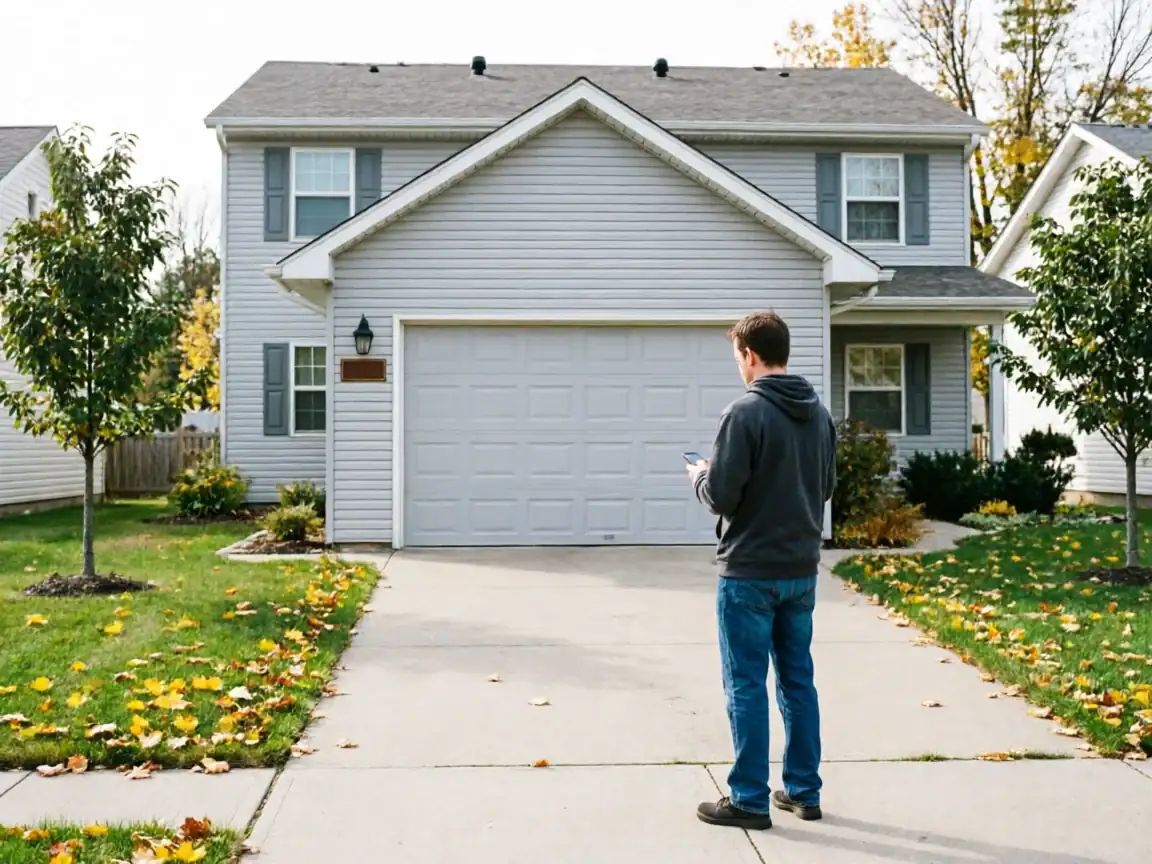
Most of the housing stock in the Columbus service area went up between 1938 and 2006, with a median build year around 1986. That spread matters because it means a huge share of doors and openers out there are original equipment from the 80s and 90s, running on hardware nobody has made in decades. A door that's 35-40 years old doesn't fail quietly. It tells you first.
Columbus sits in a cold-severe climate band, and that changes what you hear and when. Steel contracts in deep cold, so a track that was fine in August can bind in January. Grease that was workable at 60 degrees turns to paste at 15. If your door groans loudest on the first real cold morning of the year, that's not a coincidence - it's the hardware telling you the lubricant or the alignment couldn't take the temperature swing.
In neighborhoods like where a lot of that 1980s-90s stock sits close together, we hear the same handful of noises over and over because the doors were built the same way in the same decade. The symptoms repeat because the housing does.
What to Check
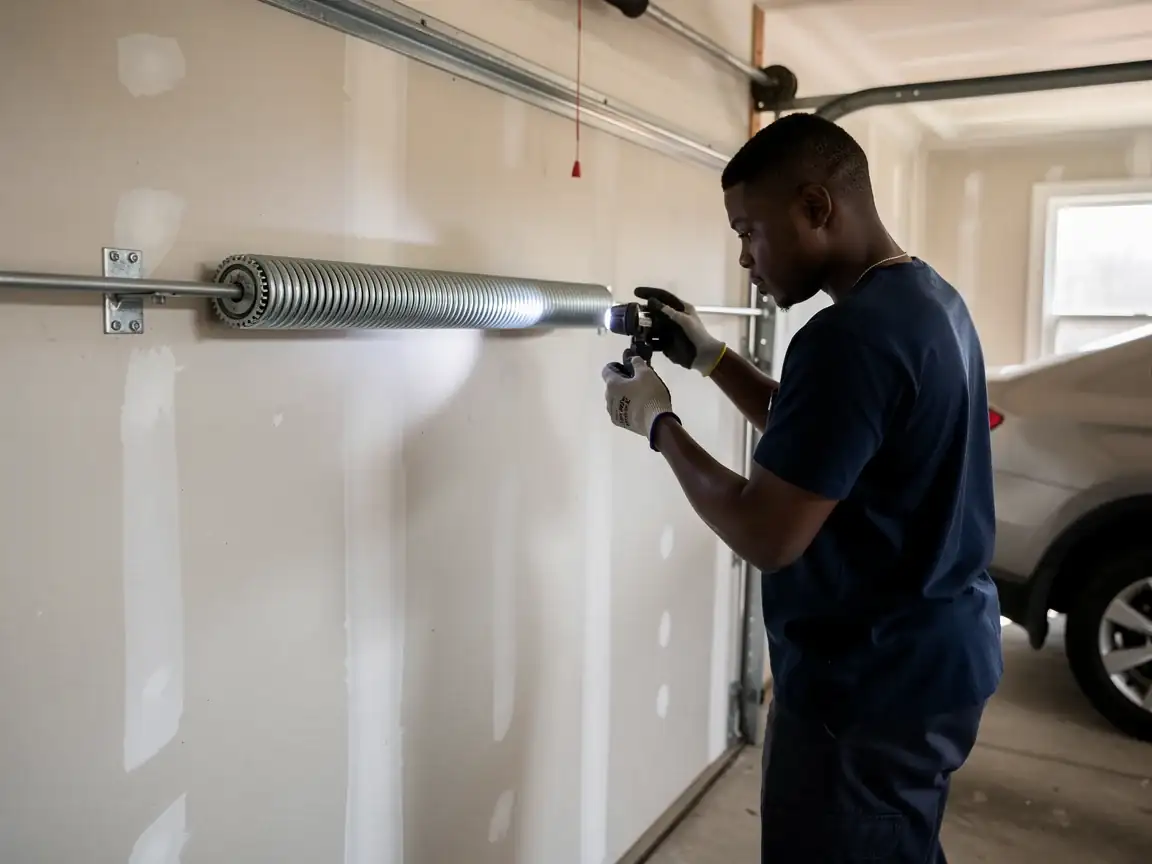
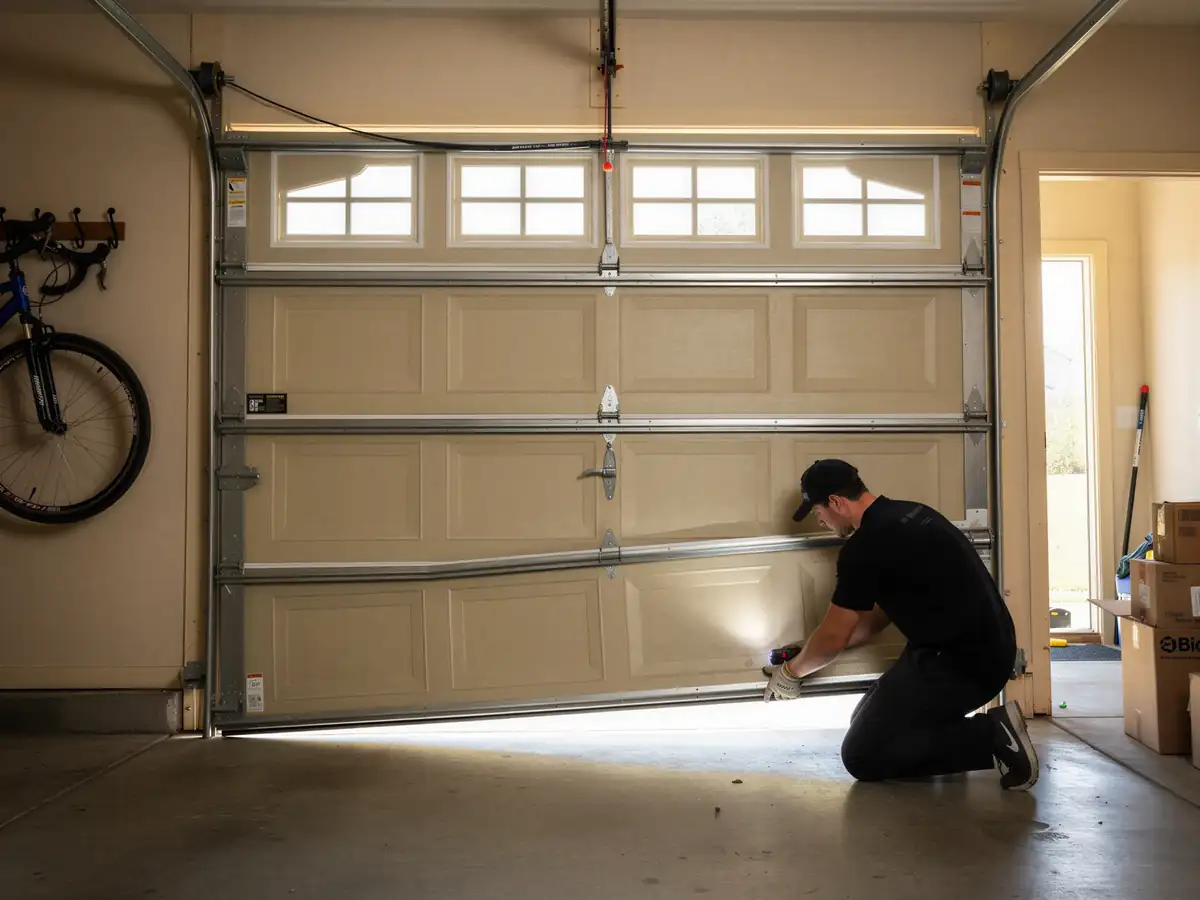
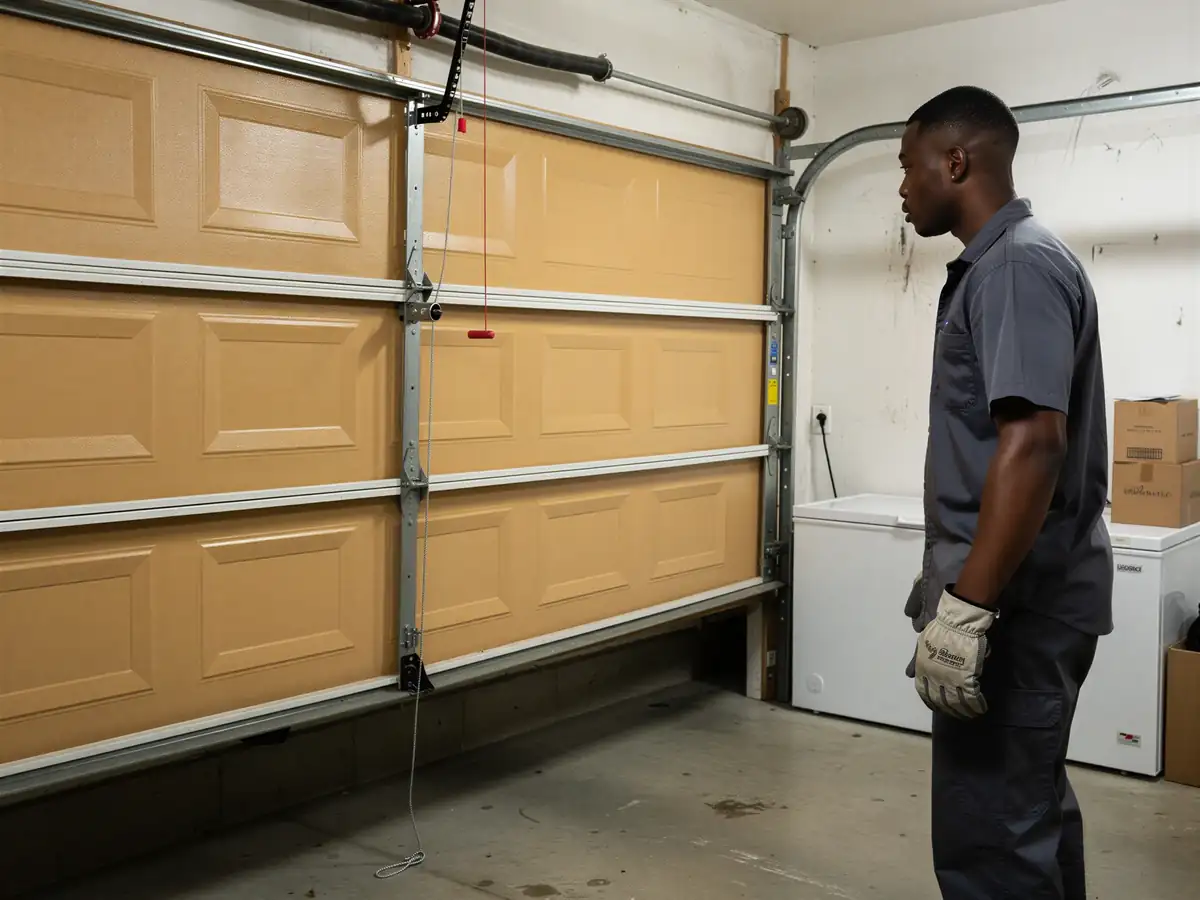
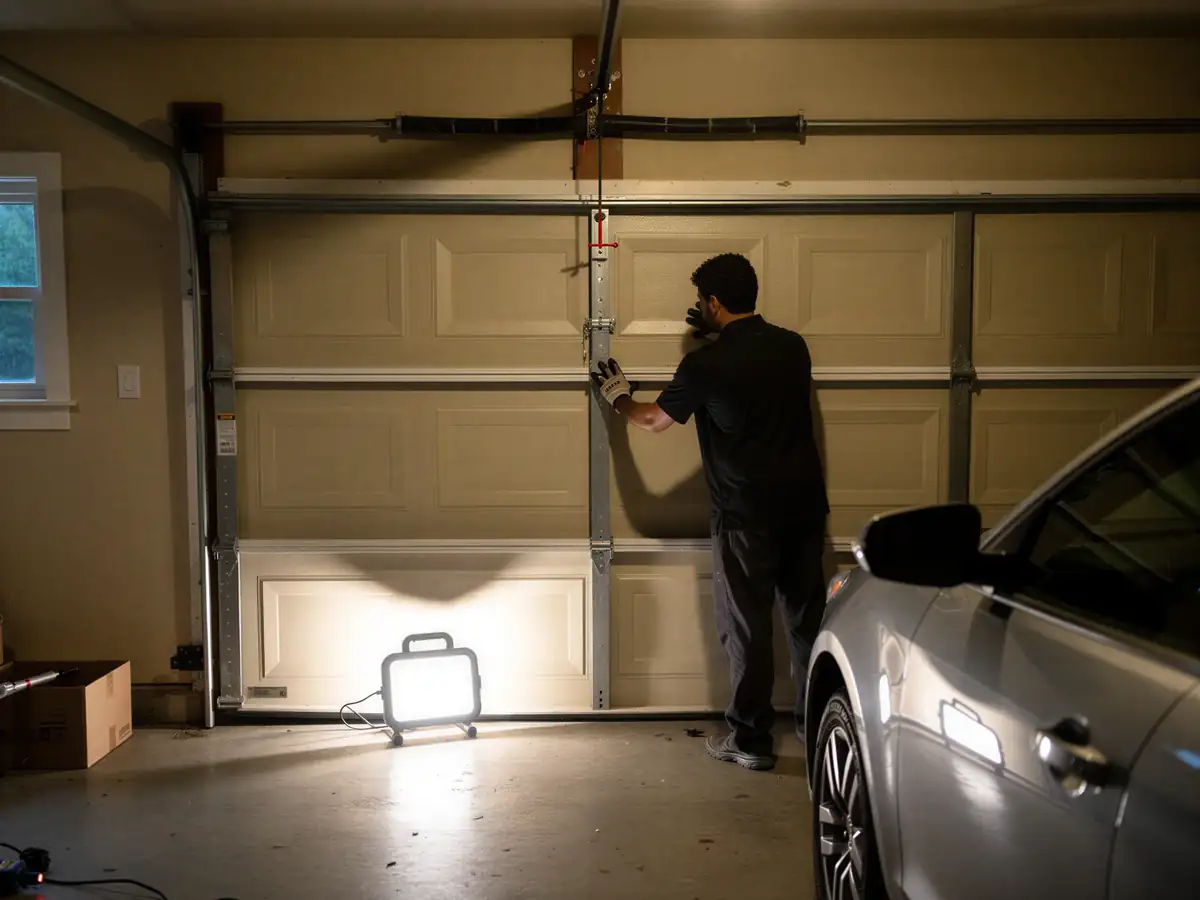
A sharp metallic bang, usually once, usually loud enough to bring you into the garage - that's almost always a torsion spring letting go. Common on doors from the 80s-90s era that have never had the spring replaced. Don't put your hands near it.
A rhythmic thump every couple of feet as the door travels is a bent track section or a flat spot on a roller, both of which get worse in cold weather because the metal is less forgiving when it's contracted.
A high-pitched squeal on the way up or down, especially first thing on a cold morning, is dry rollers or hinges. On older original hardware this is the most common complaint we get in winter, because factory lubricant from decades back has long since dried out.
A grinding or scraping sound that tracks with the opener running, not the door itself, usually points to the opener's gears wearing down - again, more common on units original to houses built in that 1986 median window, since residential openers don't last 35-40 years.
A loud pop followed by the door refusing to move is a cable, not a spring - different repair, different urgency, but still not a DIY job.
The Cost of This Job
We don't post a flat number here because the fix depends entirely on what's actually making the noise
And in a service area with housing spanning almost seventy years of construction, what's behind your wall varies a lot. A dry roller job on a newer door is a different call than replacing a torsion spring and matching cable drums on a door that predates most current hardware standards.
What we can tell you is what drives the cost up
Age of the unit, whether parts for an original 80s or 90s opener are still being made, and how much the cold has already done to worn components by the time you call. A door that's been squealing all winter and finally bangs has usually done more internal damage than one caught at the first odd sound.
One honest limitation
If your opener is old enough that the manufacturer no longer makes replacement boards or gear kits, repair isn't always the cheaper option over replacement, even if the door itself is fine. We'll tell you straight when that's the case instead of patching something that'll be back in your garage in six months.
The Situation
With roughly 71,000 owner-occupied houses across a service area built mostly in the 1938-2006 window, a lot of Columbus garages are running hardware that's older than the people calling about it. Median household income here sits near $99,964, which is worth mentioning only because it means most owners calling us are choosing between a targeted repair and a full replacement, not stretching for either - and that's the conversation worth having before anything gets opened up.
If you're in Grandview Heights, Bexley, or Whitehall and the door's been in the noisy phase for a few weeks, it's not going to fix itself with warmer weather. Cold-severe winters here don't just reveal a worn part, they accelerate the wear underneath it. The sooner the noise gets looked at, the more often it's a thirty-minute fix instead of a half-day one.
Call before the bang, not after it.