How Local Conditions Play In
Columbus sits in a cold-severe climate band, and that matters more for openers than most people think. When the temperature drops hard, grease inside the opener's drive gear thickens, and the motor has to work harder just to get the carriage moving. Pair that with a power cut during an ice storm and you get the call we hear every winter: the door won't budge, manual or motorized.
Much of the housing here went up between 1938 and 2006, with the bulk of it dating to the 1980s and 90s across the thirty-some areas we work in, the. Openers installed during that original build-out, or in the first replacement wave after it, are now old enough that their battery backup systems (where they even have one) are depleted and their gear sets are worn. A worn gear slips under load, and cold makes that slip happen sooner.
The practical result: a power cut in Columbus doesn't just stop the opener, it exposes whatever fatigue has already built up in a decades-old drive system. In a mild climate that fatigue might go unnoticed for another year. Here, the cold finds it first.
What to Check
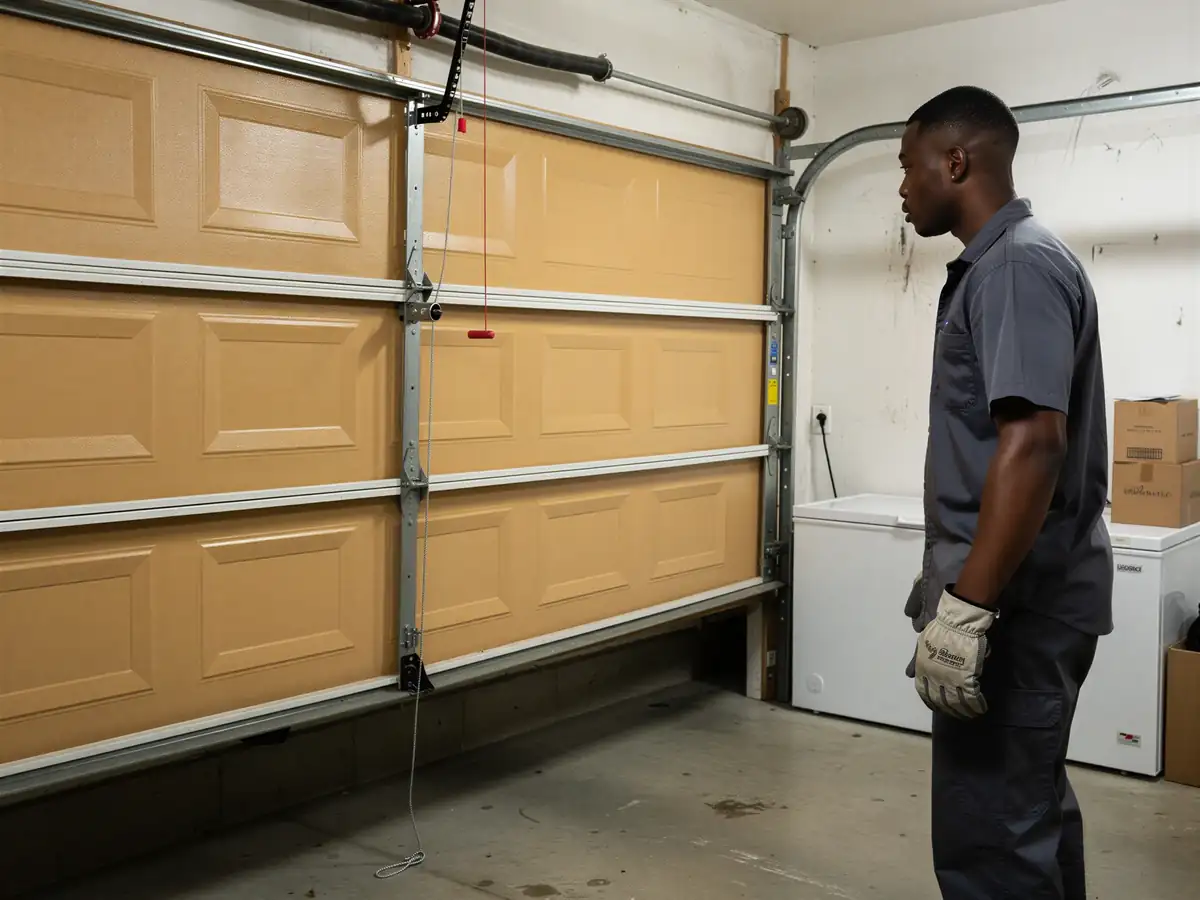
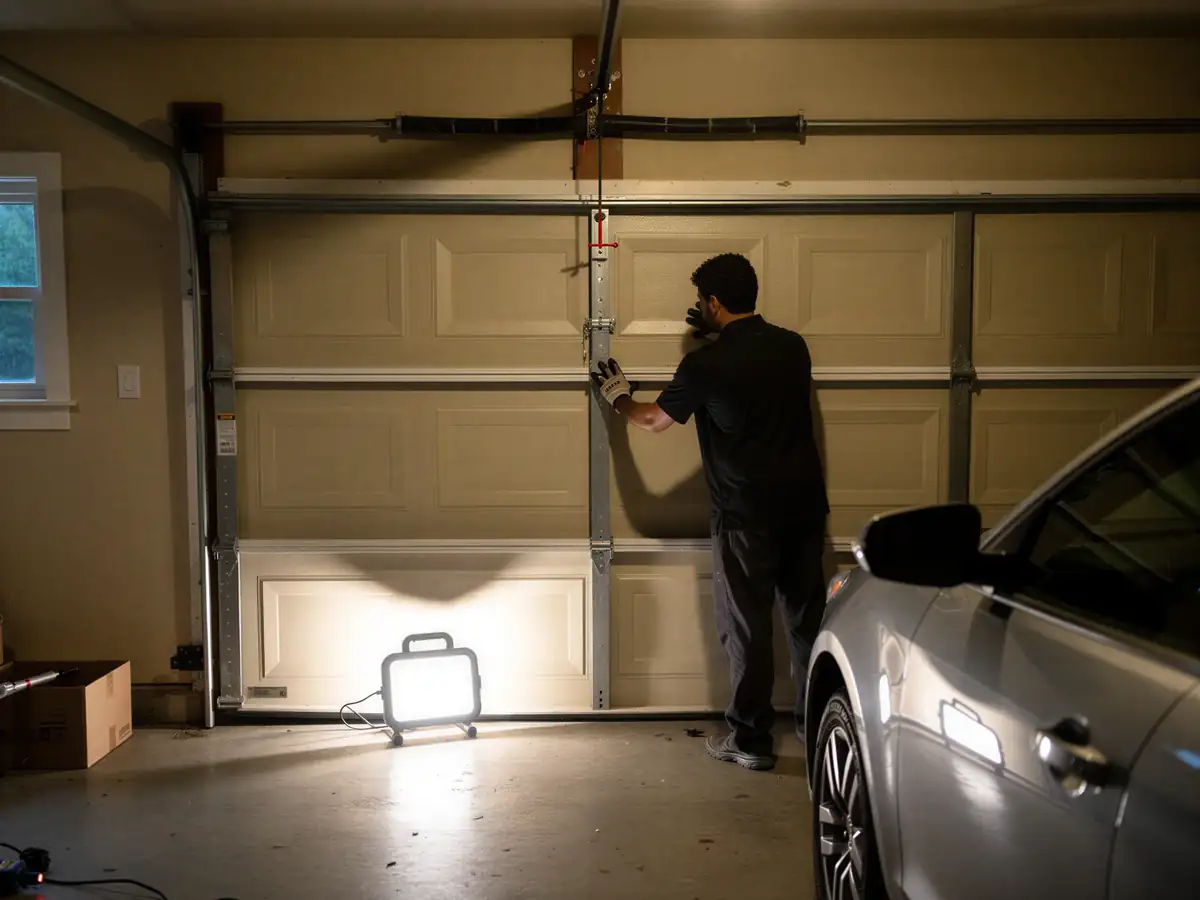
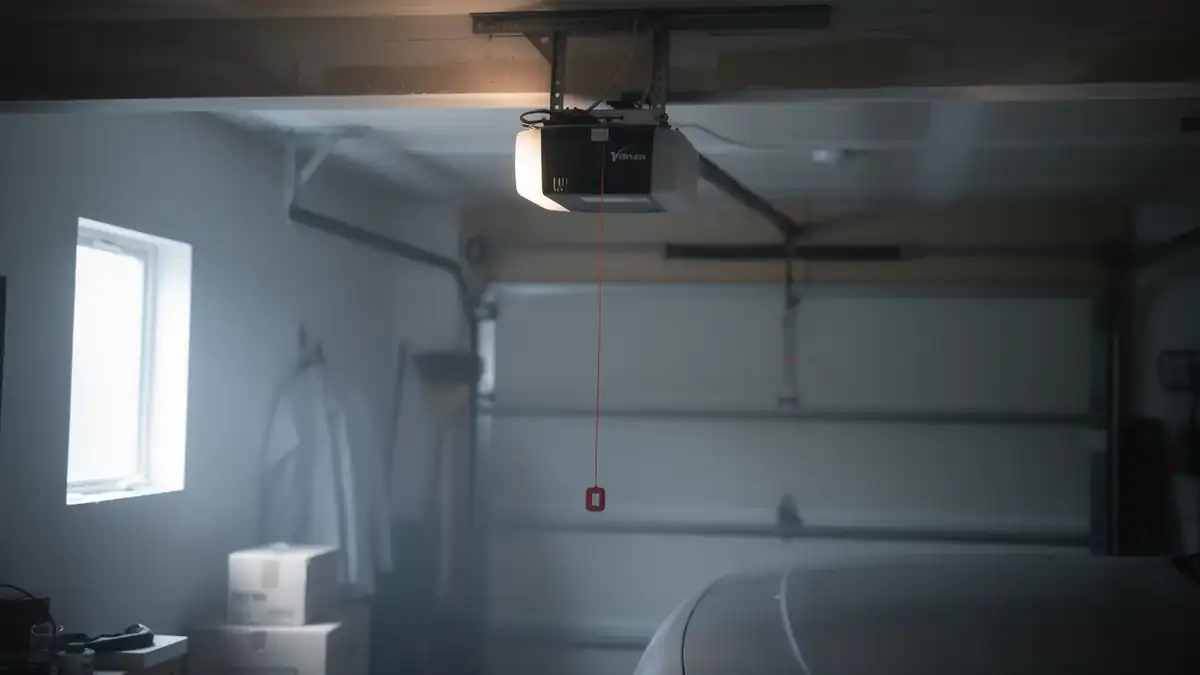
Start with the manual release cord - the red handle hanging from the trolley. Pull it straight down, not at an angle, and the carriage should disengage cleanly. If it's stiff or won't release, that's cold-thickened lubricant or a bent track, not a dead opener.
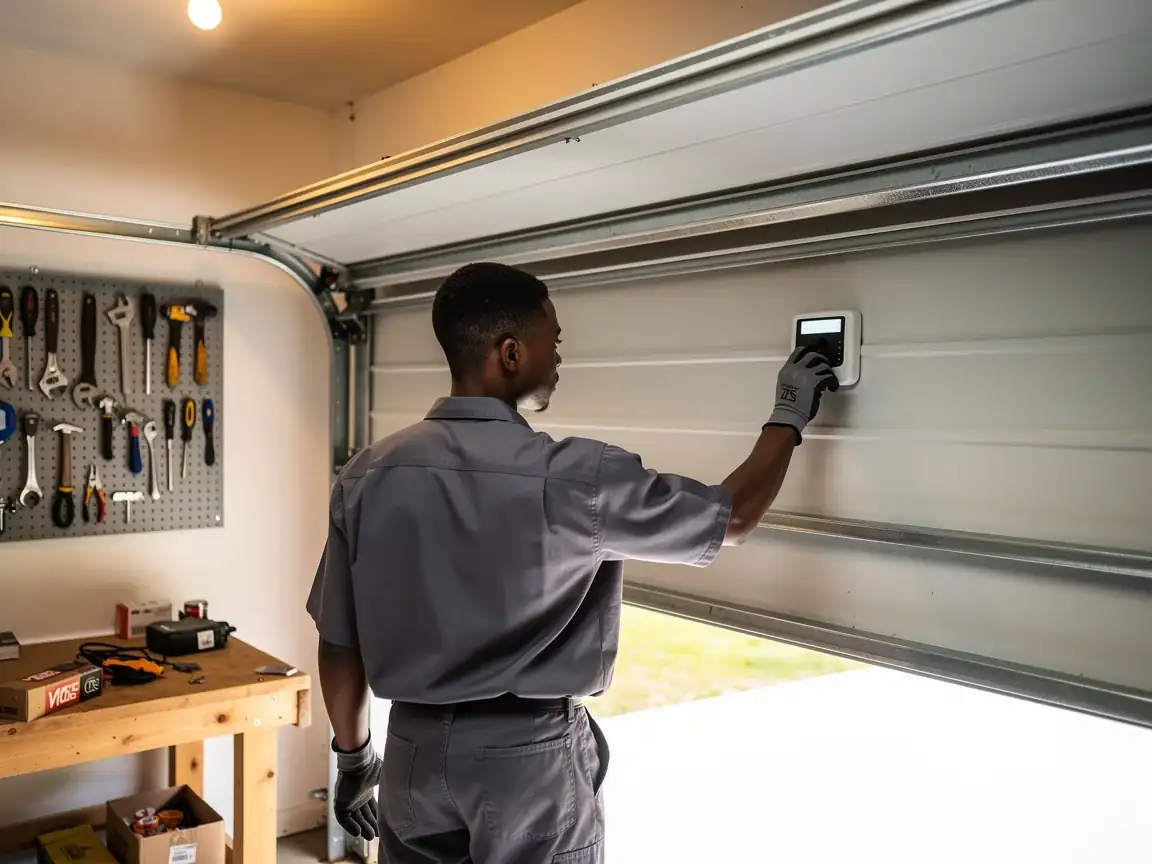
Next, check whether the opener has a battery backup unit and whether the light on it is lit. Many openers installed on 1980s and 90s-era houses in this area predate battery backup as a standard feature, so if yours doesn't have one, the door simply won't move on opener power during a cut - that's expected, not a fault.
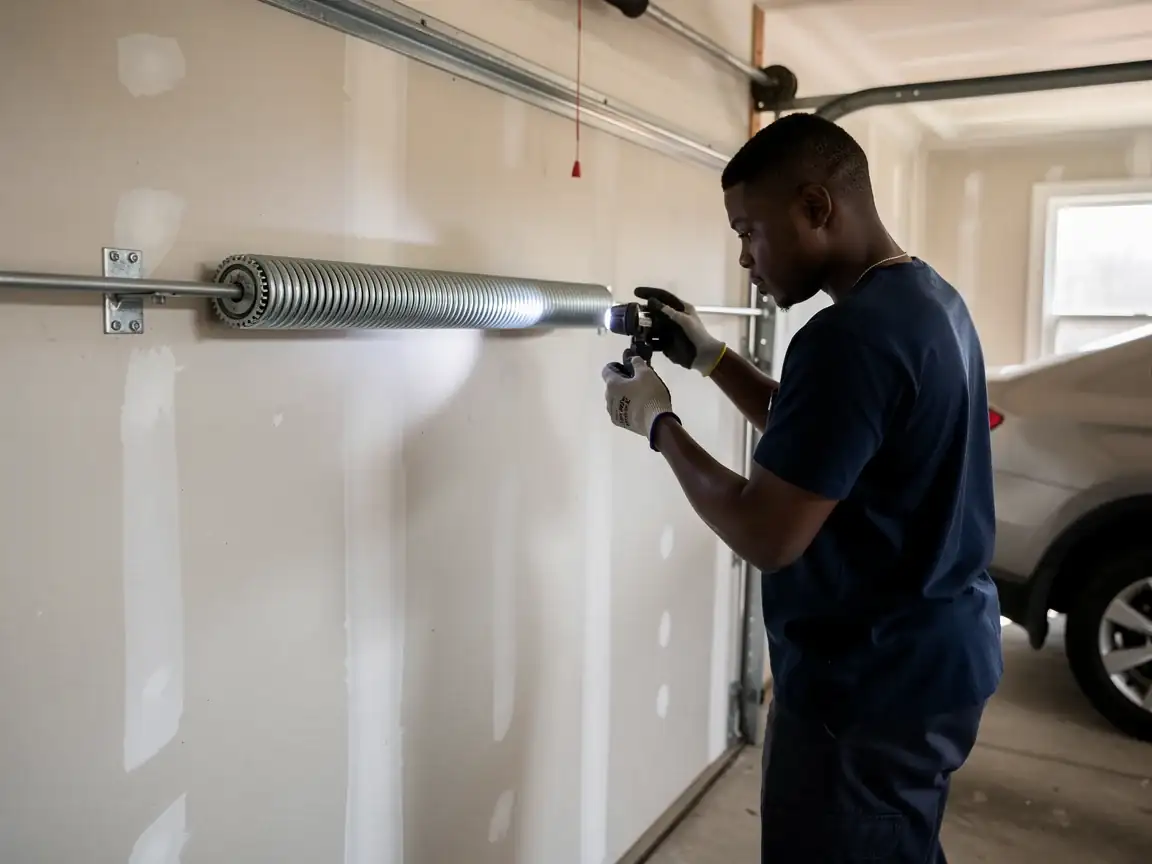
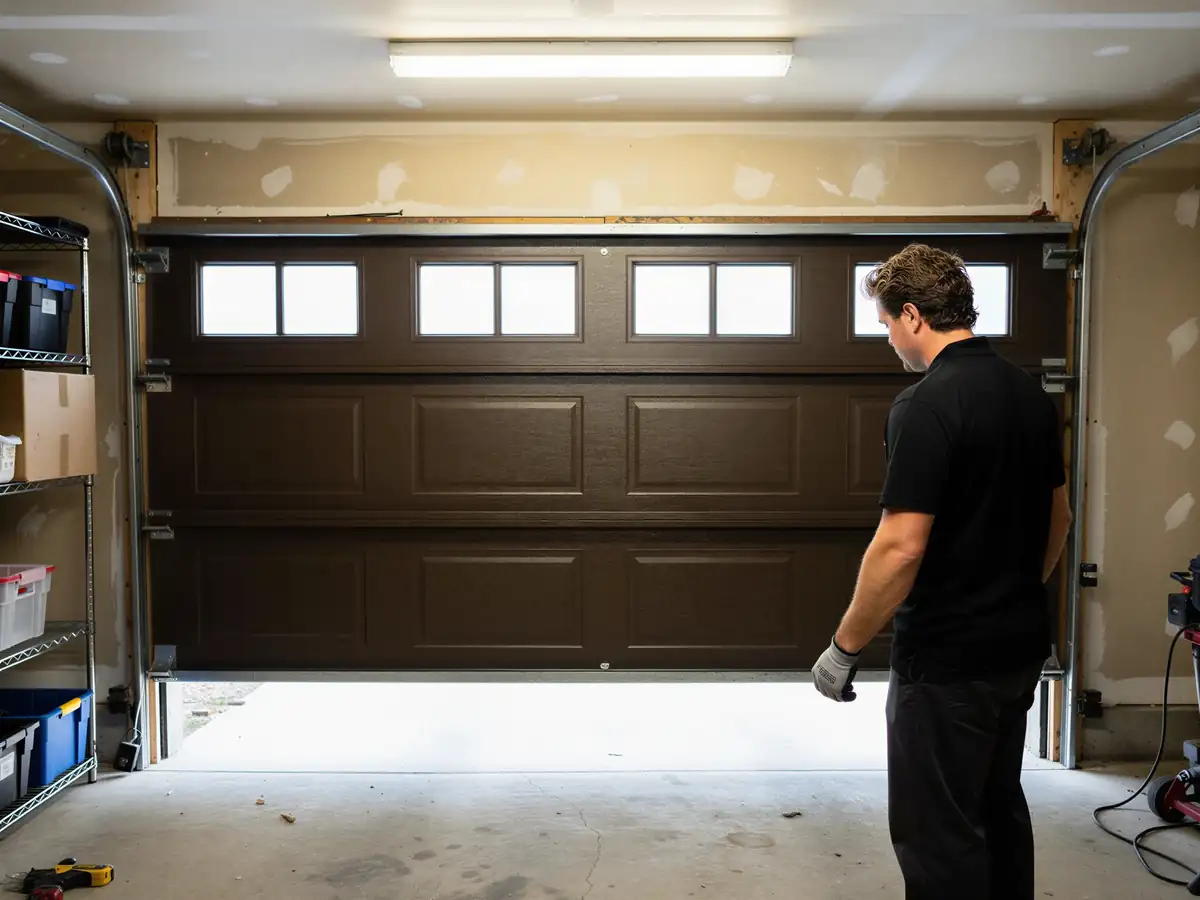
With the door disengaged, lift it by hand a foot or two and let go. A properly balanced door should stay put or drift slowly. If it drops fast or shoots up, the springs are compensating for age or cold-stiffened hardware, and that's a job for a tech, not a homeowner with a step ladder.
Last, look at the weatherstripping at the bottom panel. On older doors in this climate band, cracked or missing seal lets cold air stiffen the track rollers from the inside, which adds resistance the opener has to fight even after power's restored.
The Cost of This Job
We can't quote a number here without knowing which opener
Which door, and how old the spring set is - and we're not going to invent one. What we can tell you is what drives the bill in this market: whether the opener needs a logic board or a full replacement, whether the torsion spring is original to a pre-1990s install and needs matching, and whether battery backup is being added where it never existed.
Homes in this area run a median household income near $99,964
Which is relevant mainly because it tells us what kind of opener upgrades get requested most - battery backup and smart controls - rather than bare-minimum fixes. That's context, not a price.
- $99,964 median household income
The honest limitation
If your opener is original to a house built decades ago and a replacement part isn't stocked anymore, we're going to recommend a new opener rather than chase a part that may take weeks to source. That's not upselling, it's what cold-climate call volume has taught us about which repairs hold up through another winter.
The Situation
Across the roughly 70,994 owner-occupied houses in our service area, a lot of garage doors are still running openers installed when the house was built or during that 1980s-90s wave. That's the installed base we're dealing with every winter when a power cut hits.
If you're in Grandview Heights, Bexley, Whitehall, or the your housing stock skews toward that same era, so the same cold-plus-age combination applies. Farther out - Powell, Dublin, New Albany - you'll see more variation in build year, but the climate band doesn't change, and neither does what cold does to an aging drive system.
The fix isn't complicated: a battery backup unit where there isn't one, fresh low-temp lubricant on the track and gear, and a spring check before winter rather than during it. None of that requires guessing. It just requires knowing what this city's weather and housing age actually do to a garage door opener, and acting on that instead of generic advice that would apply anywhere.