How Local Conditions Play In
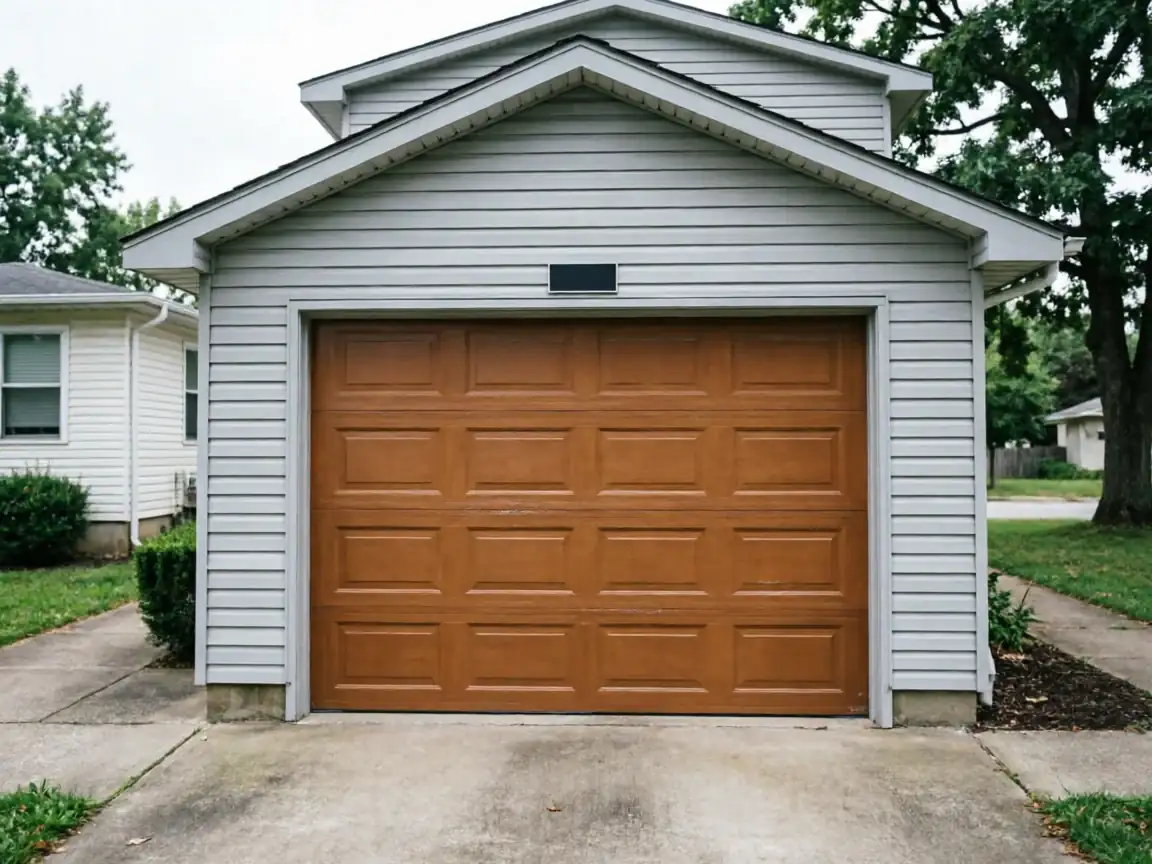
Most of the housing stock around Columbus went up between 1938 and 2006, with the bulk of it dating to the 1980s and 90s across the thirty-some neighborhoods we work in, from the out to the side. Tracks installed during that build boom are steel, bolted to wood jambs that have had thirty to forty years to shift, settle, or dry out. A door doesn't need a dramatic event to go off track in a house that age - it needs one track bracket that's worked loose a sixteenth of an inch at a time.
Columbus sits in a severe cold climate band, and that matters more than people think. Steel track contracts in deep cold and expands again once the garage warms up on a sunny afternoon. Do that every winter for decades and the fasteners holding the track to the frame back out a little more each cycle. Add a slab that heaves slightly with frost and the vertical track sections no longer sit plumb to each other. The rollers ride fine for years, then one cold snap is the day a roller finally catches the lip of a bent track and the door binds or jumps.
This isn't a problem unique to one block - it's a function of how old the stock is and how cold it gets here.
What to Check
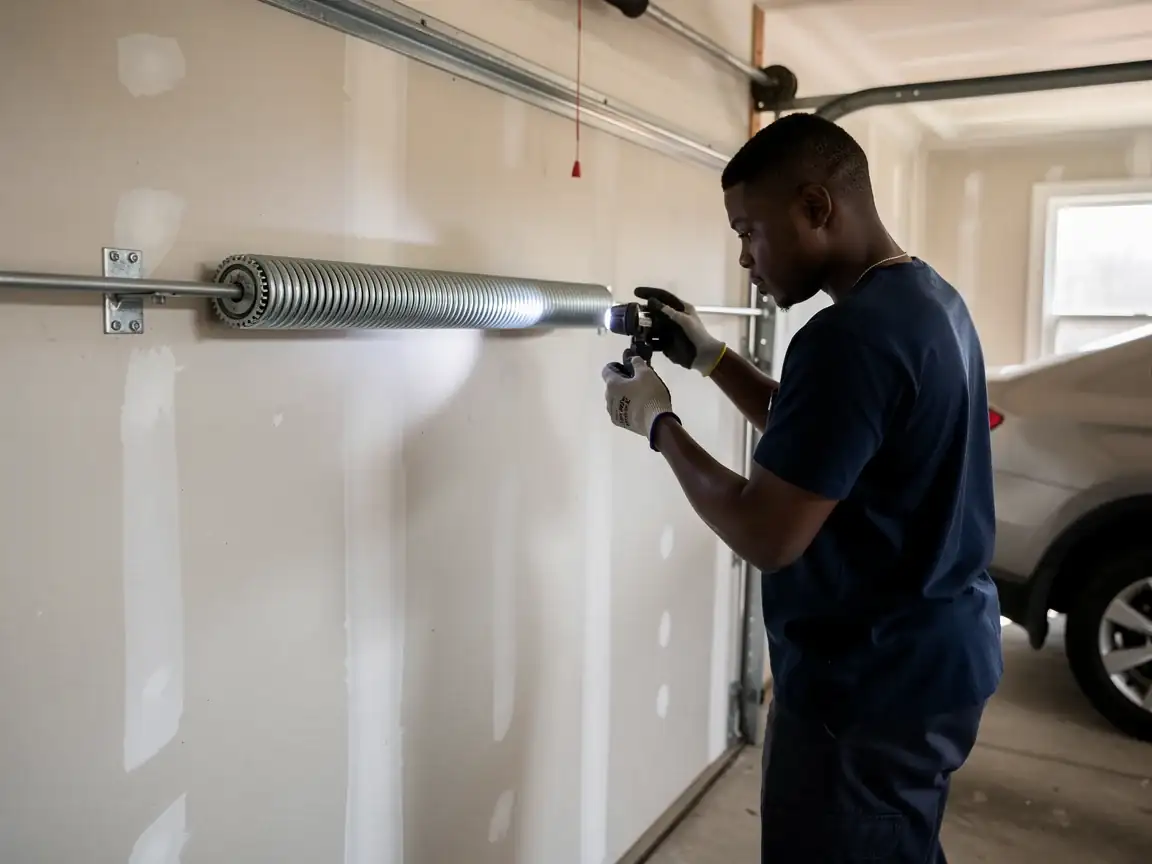
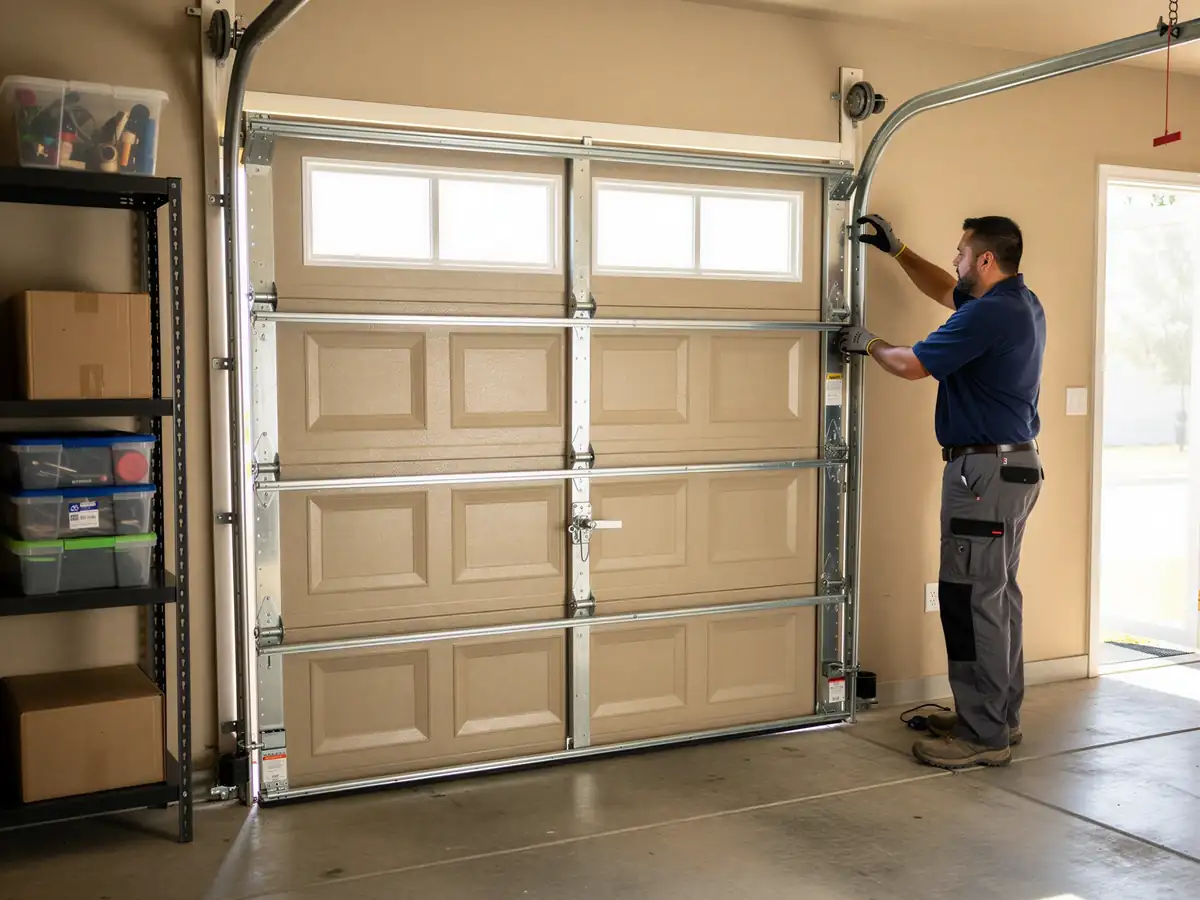
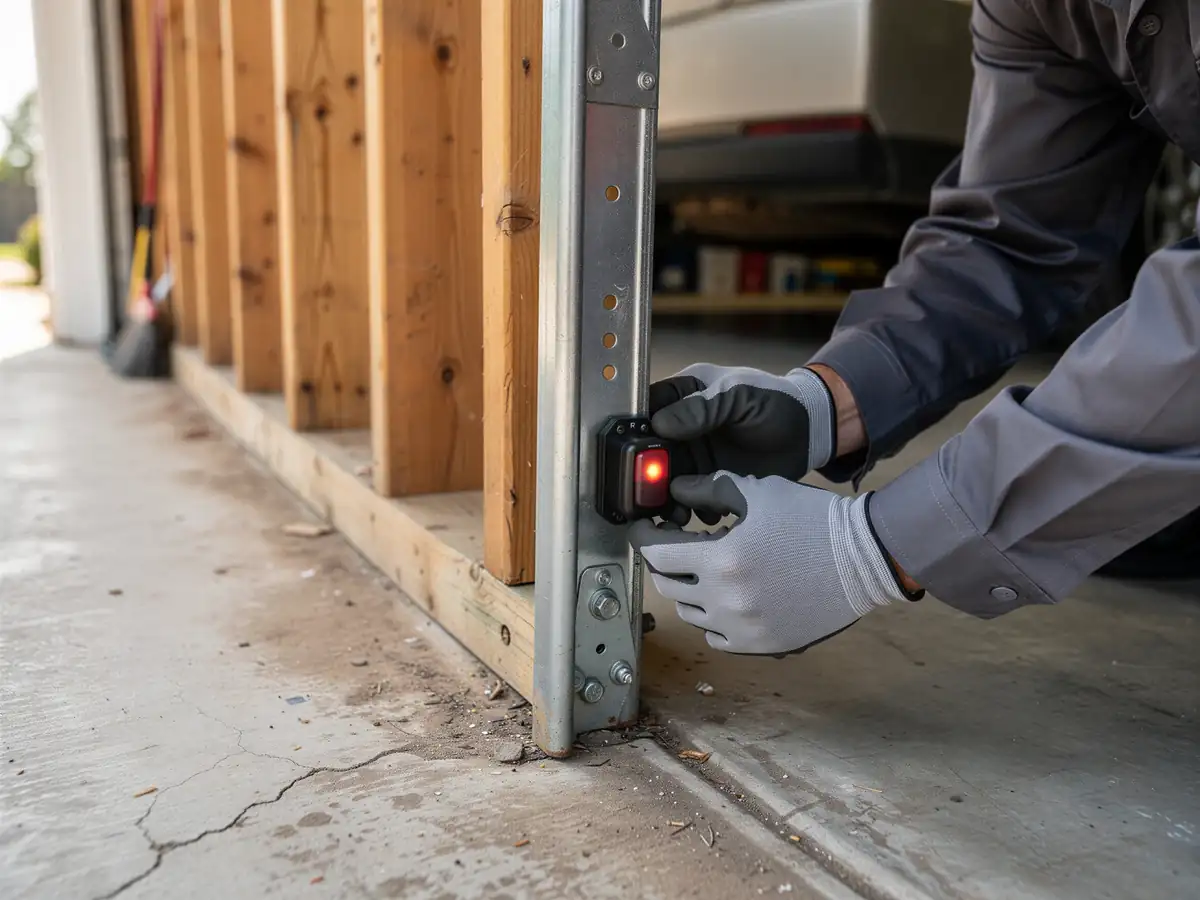
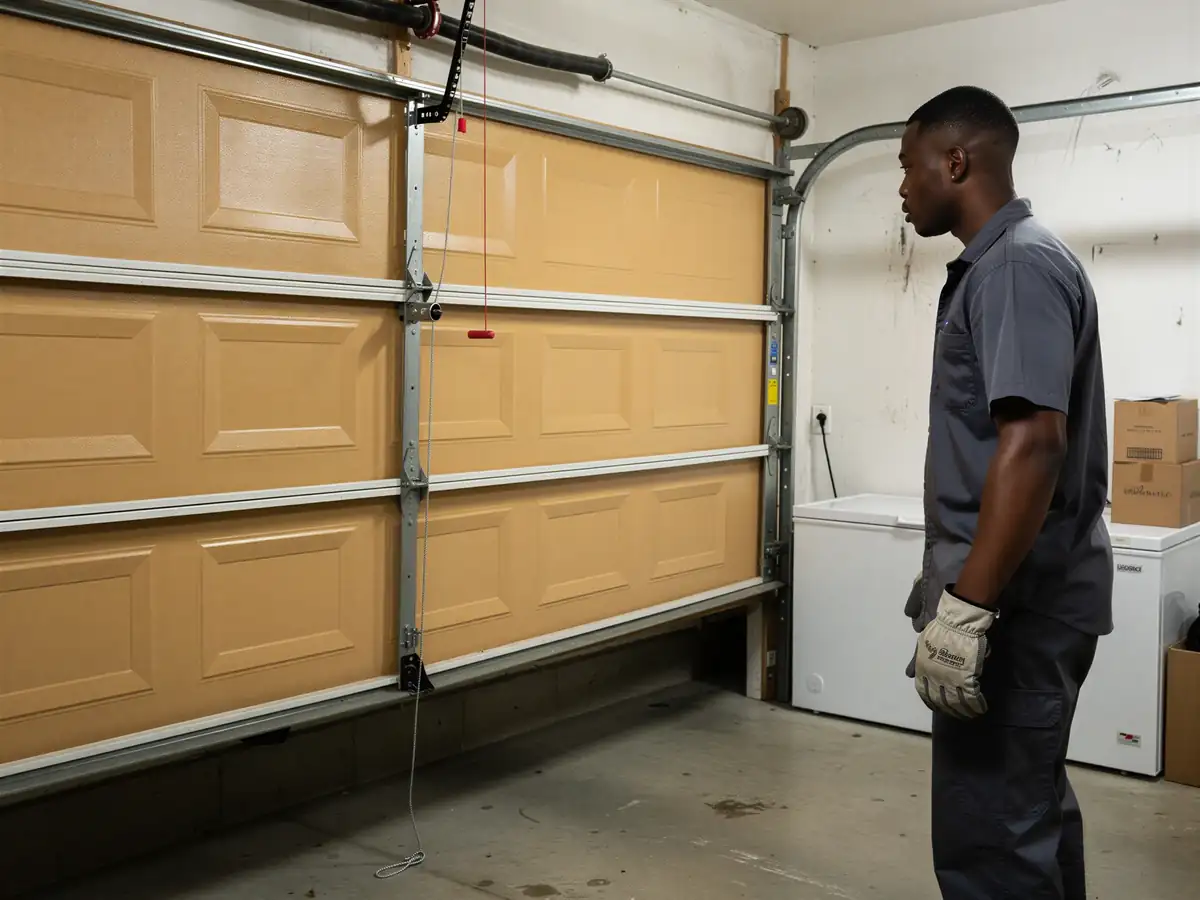
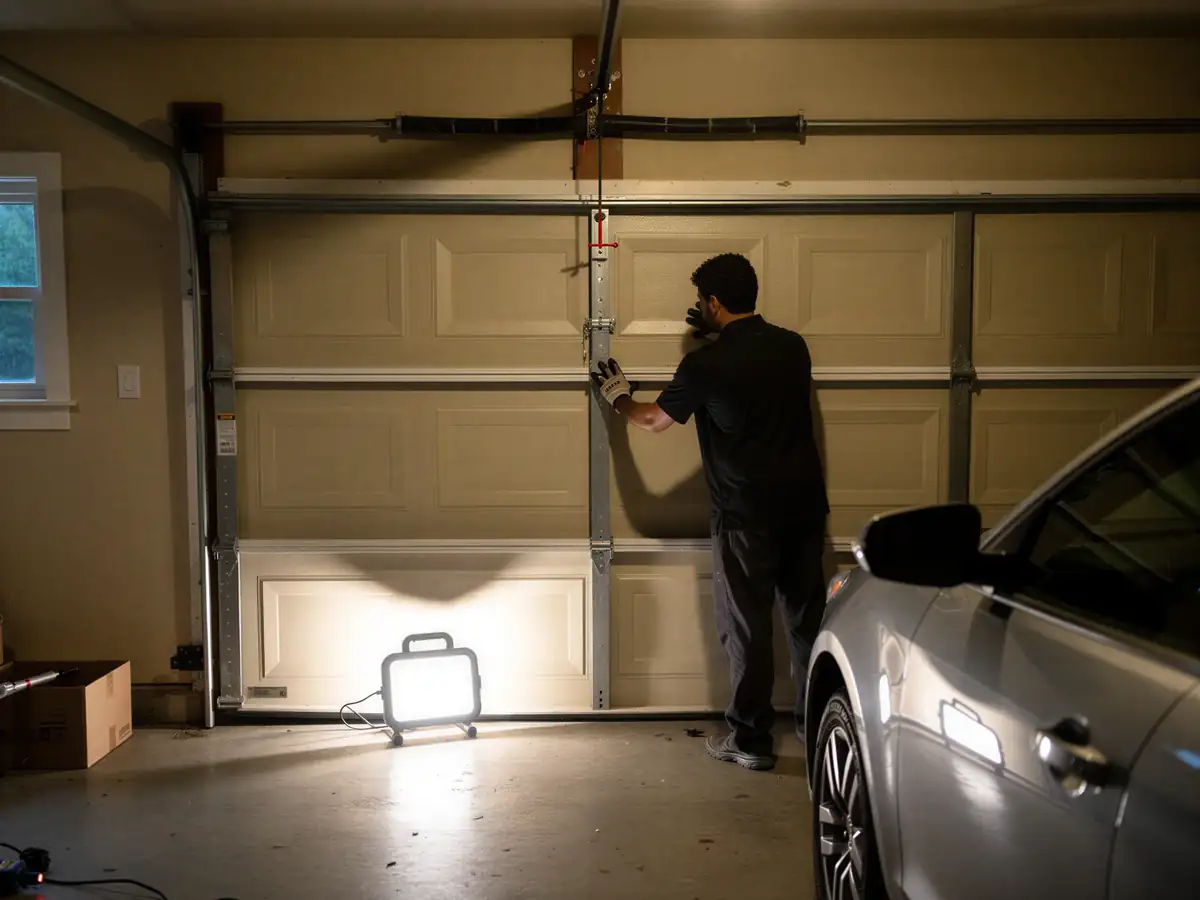
Start at the brackets where the track bolts to the wall studs or jamb. On houses from the 1980s and 90s building wave that makes up most of what we see, these brackets were often set with lag screws into framing that's since dried and shrunk - wiggle the bracket by hand and see if it moves. Next, look at the vertical track sections where they meet the horizontal curve near the ceiling; a gap or a kink there is usually what throws a roller off the lip.
Check the rollers themselves for flat spots or cracked edges - cold makes brittle nylon rollers crack rather than wear evenly, and a cracked roller doesn't track true. Run a level against the vertical track on both sides; track installed decades ago, before a slab had fully settled, can be out of plumb by more than you'd expect just from age and movement, not from any single accident.
Last, check the cables are seated evenly in both drums. An off-track door is very often not a track problem at all but a cable that slipped and pulled one side of the door higher than the other, which then forces the rollers sideways against the rail until something gives.
The Cost of This Job
We don't have a flat number to quote here because what it costs depends on what's actually wrong once we're underneath the door
A track that just needs rebolting to sound framing is a different job than one that's bent and needs replacing, and a cracked roller set is cheaper than a cable re-spool with a bent drum. What we can say is that in the older housing stock from the 1938-2006 build range, it's common to find more than one of these problems at once, since the same age and the same cold cycles that loosen a bracket are also hardening rollers and stretching cable tension over the same decades.
One honest limitation
If the track itself is bent rather than just knocked loose, we won't try to hammer it back true. Bent track rarely holds alignment for long once it's been forced, and reinstalling a warped rail is a false economy - it just fails again. In that case replacement track is the right call even though it costs more up front than a bracket fix.
The Situation
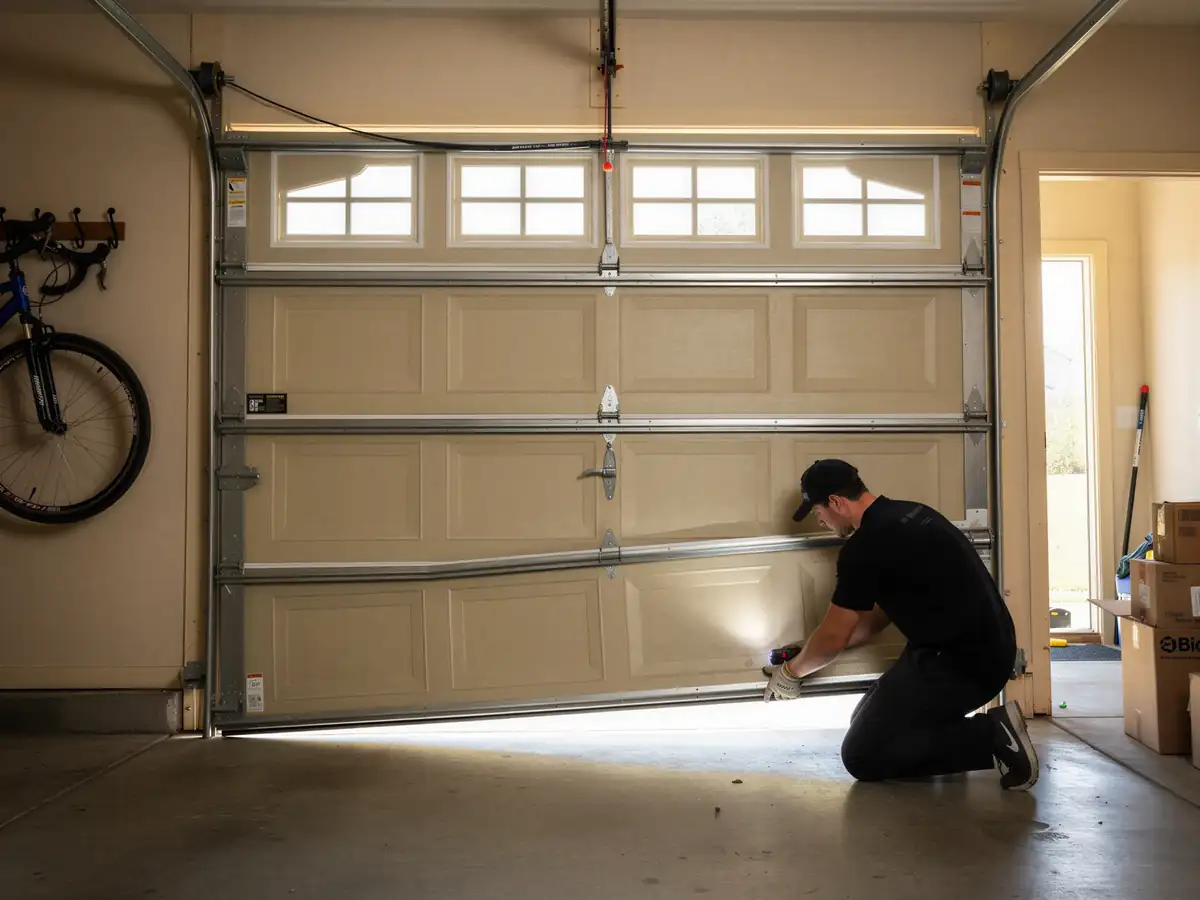
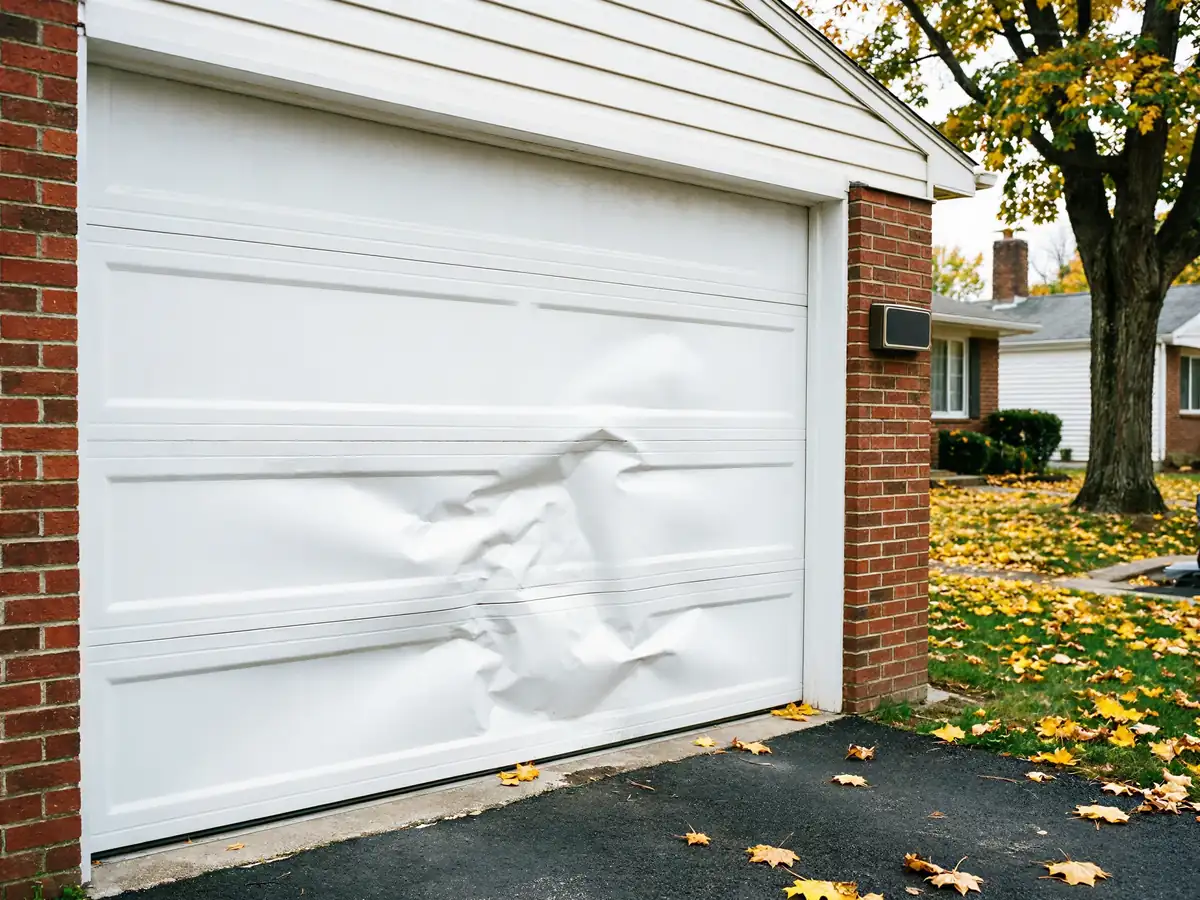
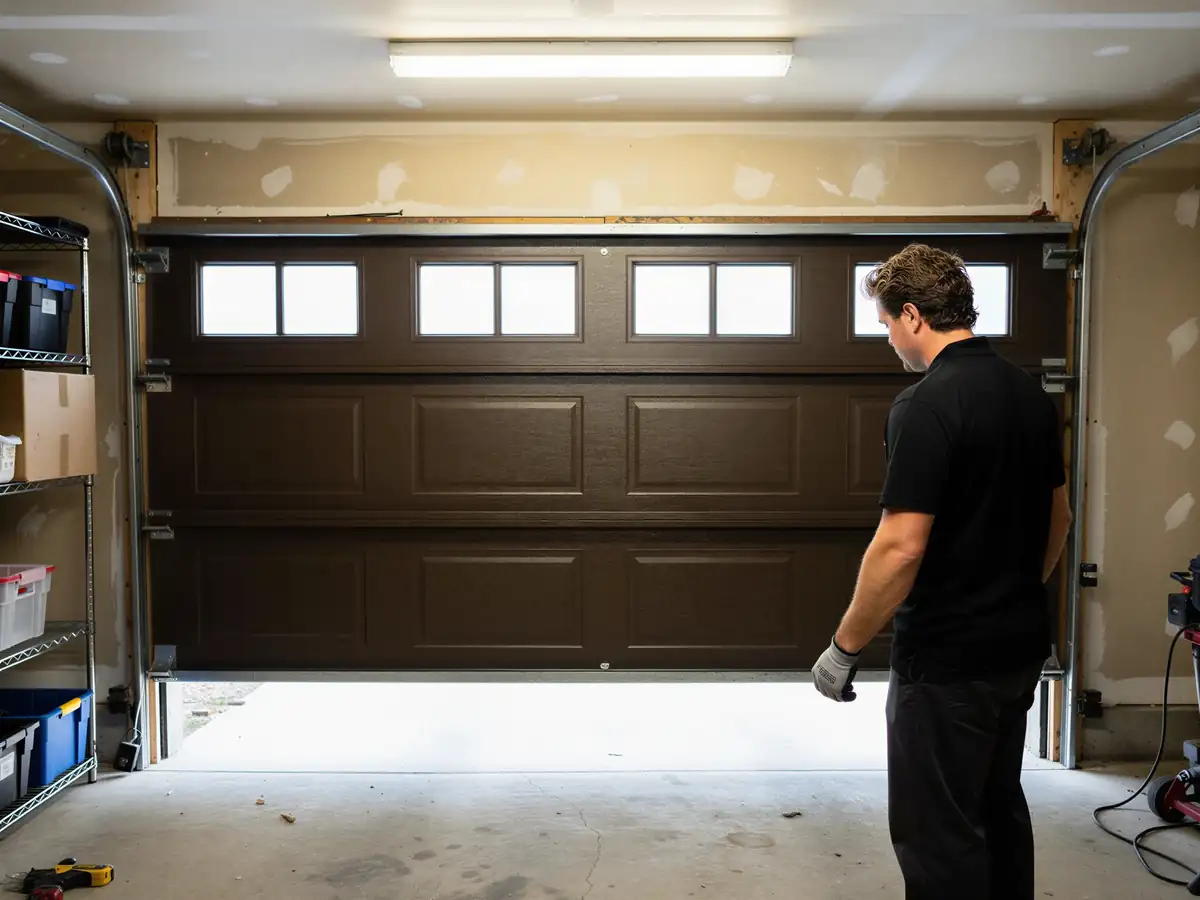
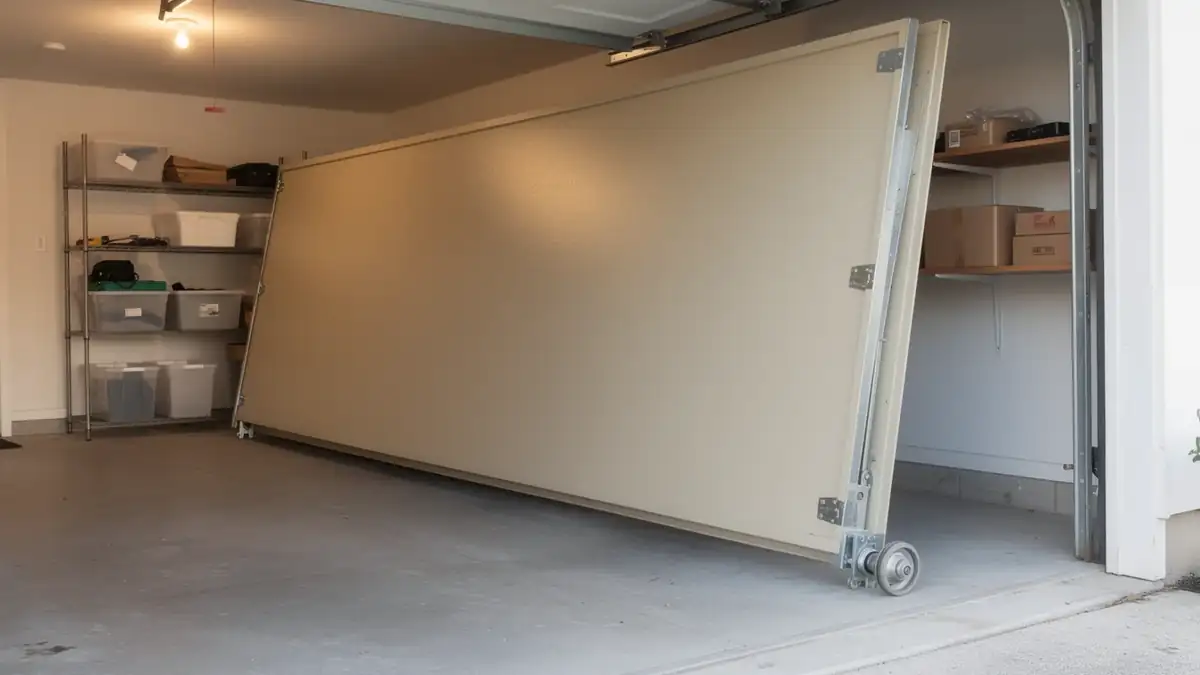
If your door is riding rough, rattling in one spot, or hanging crooked, don't keep running the opener through full cycles - that's how a roller that's half off the rail finishes the job and comes out entirely, usually bending the track further and sometimes pulling the bottom panel with it. Close it by hand if you can get it down safely, and leave it.
Columbus households skew toward owner-occupied single-family homes - about 71,000 of the roughly 129,000 households in the service area own rather than rent - and most of those owners are dealing with a door system original or close to original to a house built decades ago. That combination of age and a real winter is exactly what produces this failure. It's worth having someone look at the bracket, track plumb, and roller condition before the cold months rather than during the week it hits single digits, since that's reliably when a marginal track finally lets go.