How Local Conditions Play In
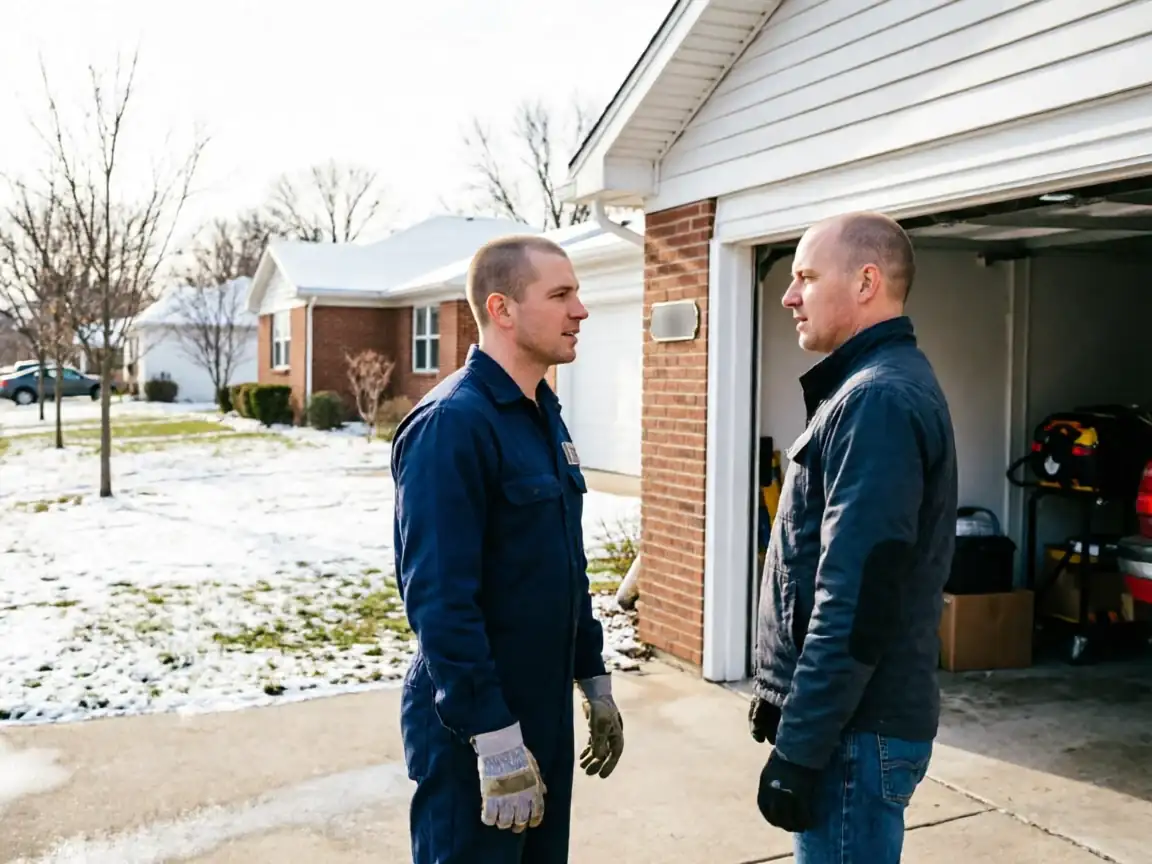
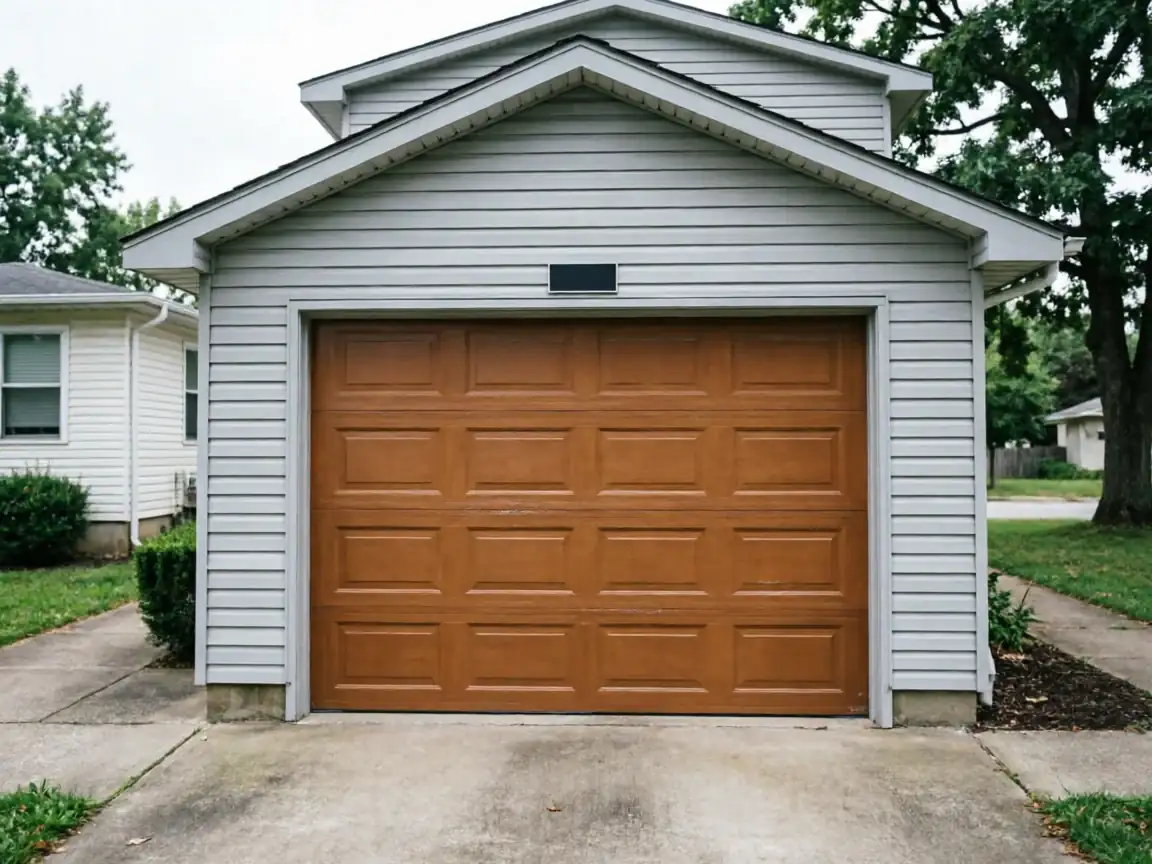
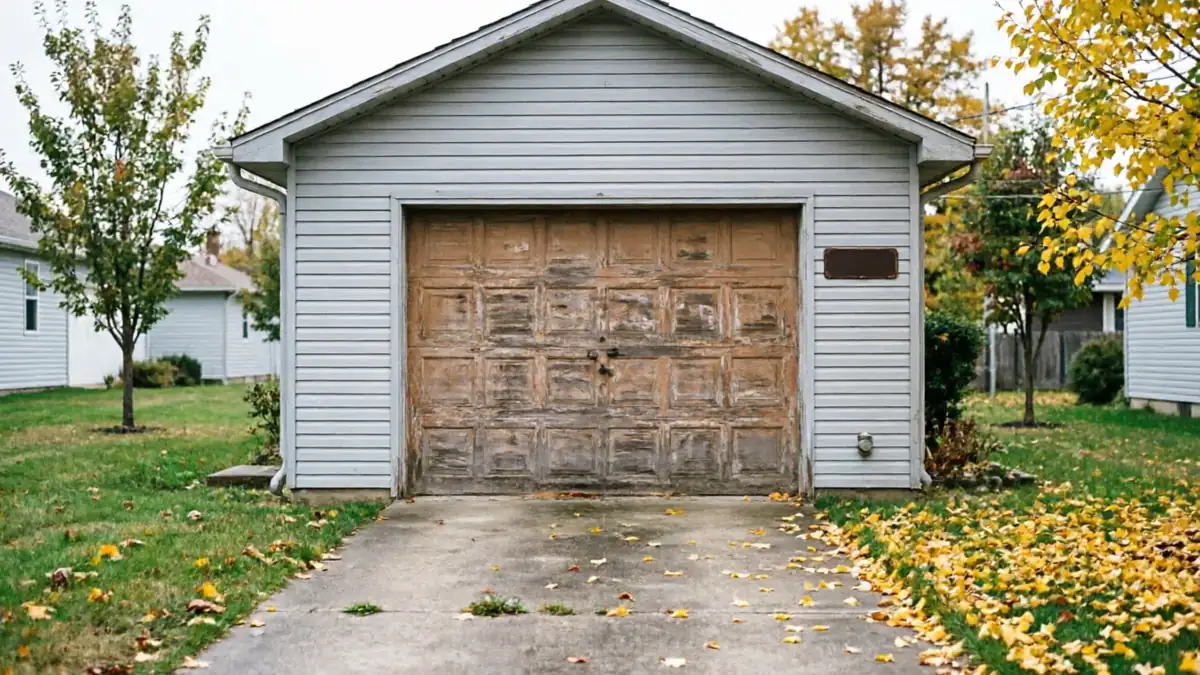
Columbus sits in a severe cold climate band, and that matters more for an older door than most homeowners realize. Housing in the service area went up mostly between 1938 and 2006, with the median build year landing around 1986, and across the 30 named areas we work in - the - the bulk of the stock is 1980s and 90s construction. That generation of door came with thinner steel skins, minimal insulation, and galvanized hardware that wasn't built for decades of freeze-thaw cycling. A door installed in 1988 has gone through roughly 35 winters of a cold climate expanding and contracting its panels, seals, and springs. That's not a flaw in the door - it's just the math of age meeting weather. When we're called out to a torsion spring that's gone brittle or a bottom seal that's cracked straight through, the age of the house usually tells us what we're going to find before we open the panel. Newer builds out toward Powell or New Albany see less of this because the stock there skews younger; closer in, the older doors are the rule, not the exception.
What to Check
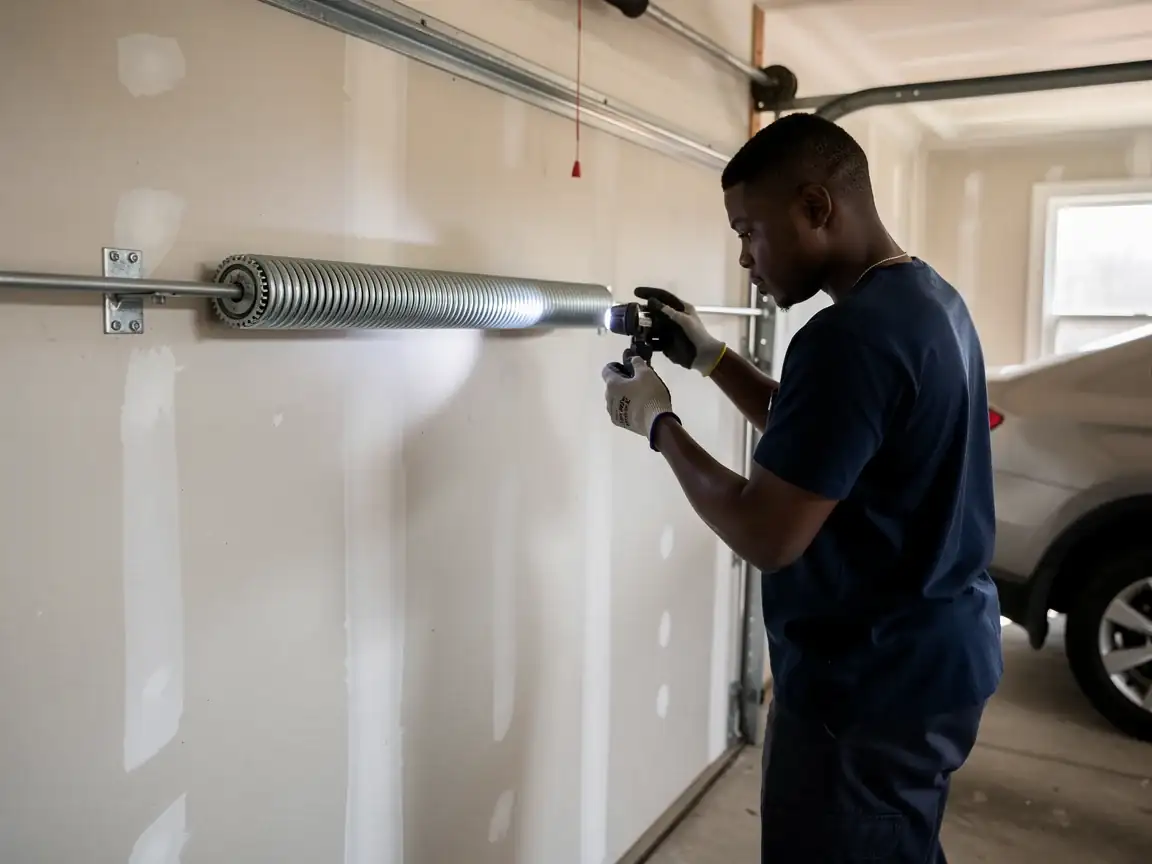
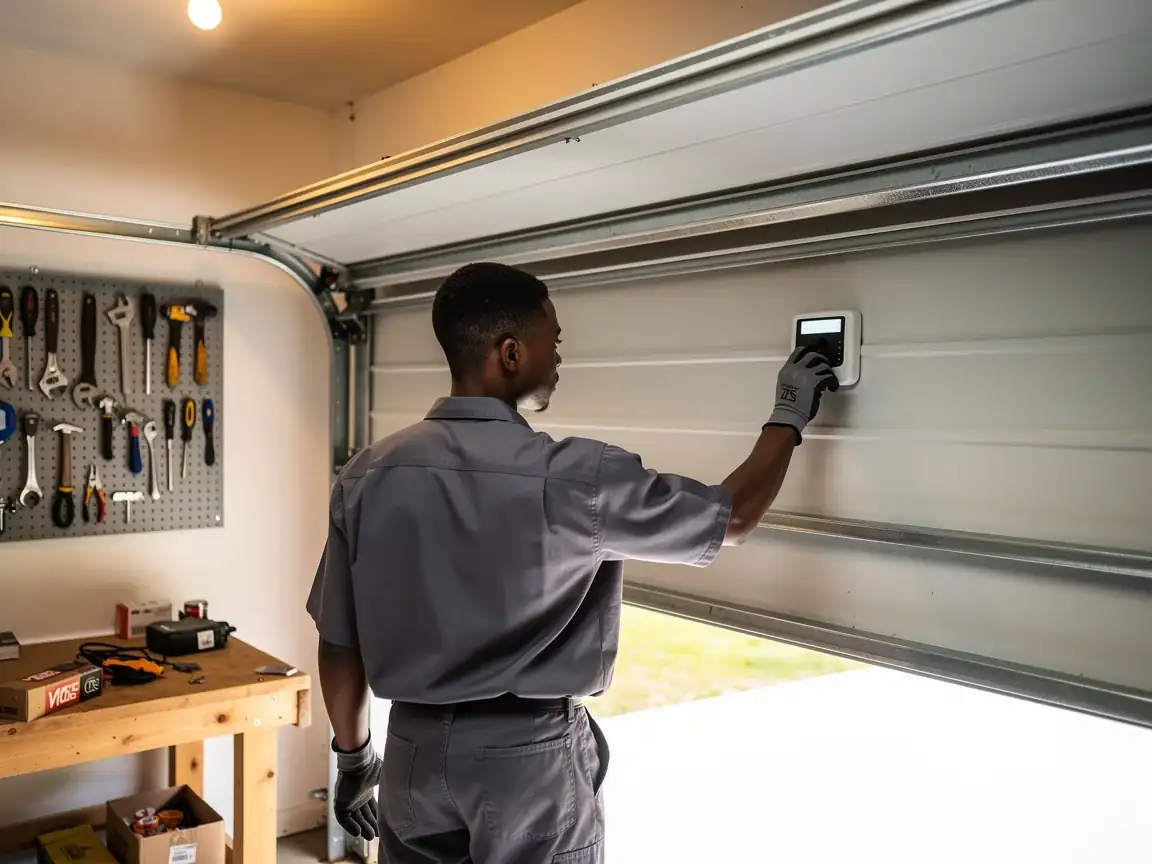
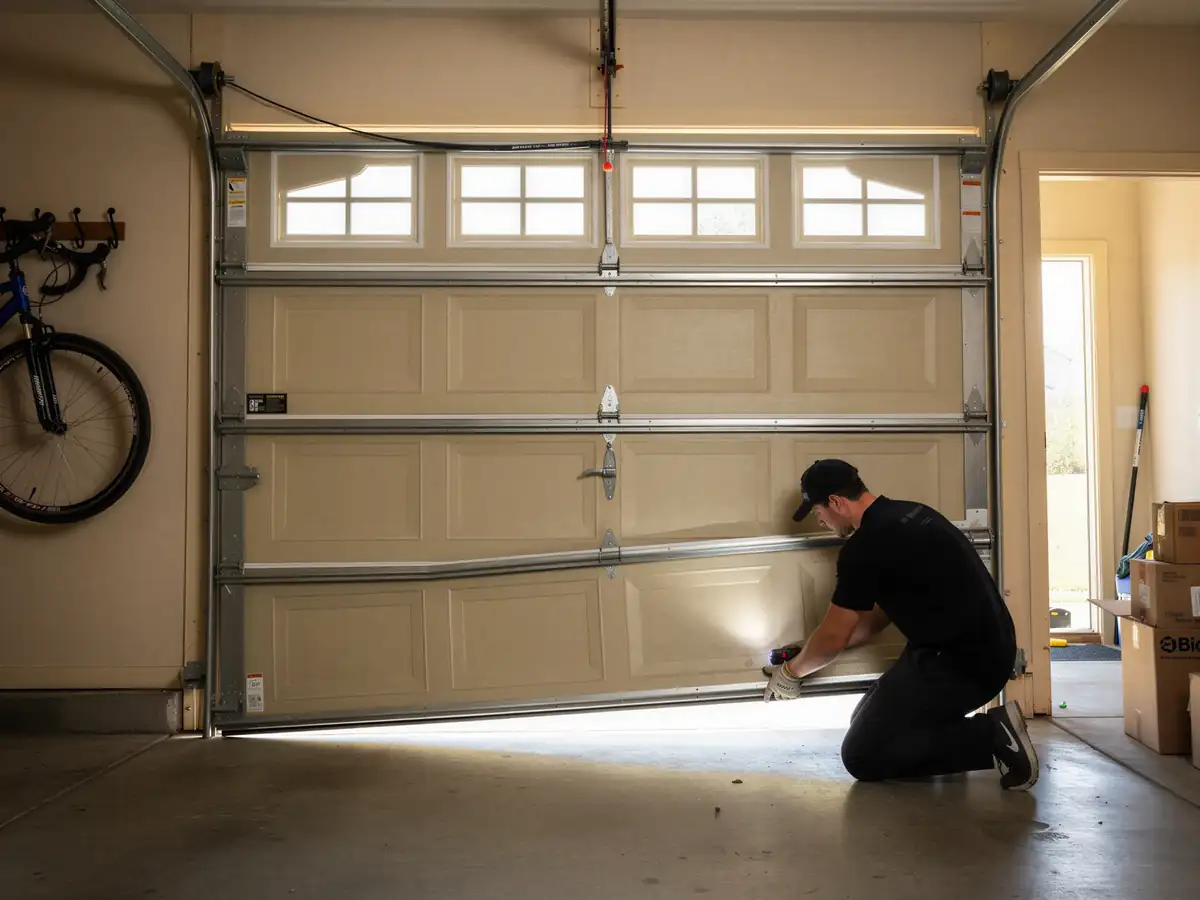
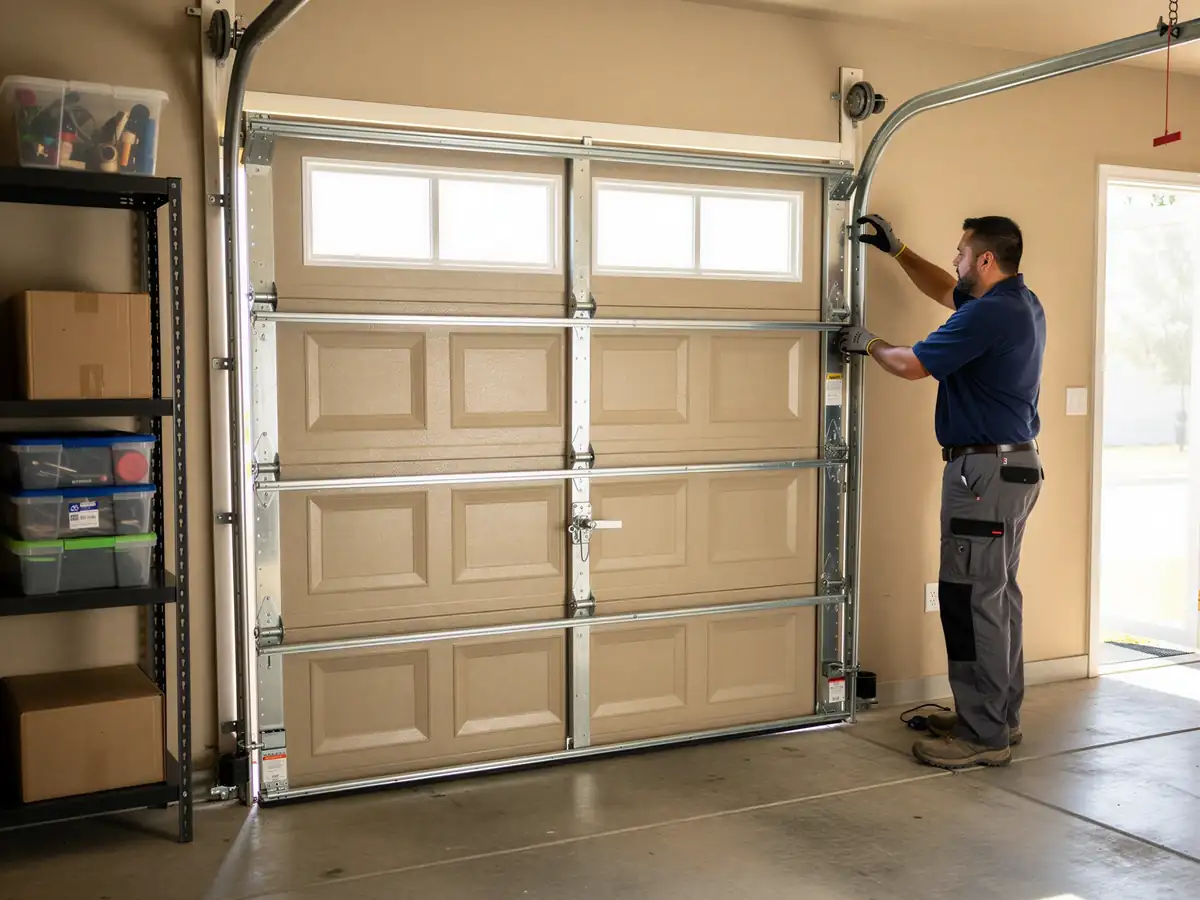
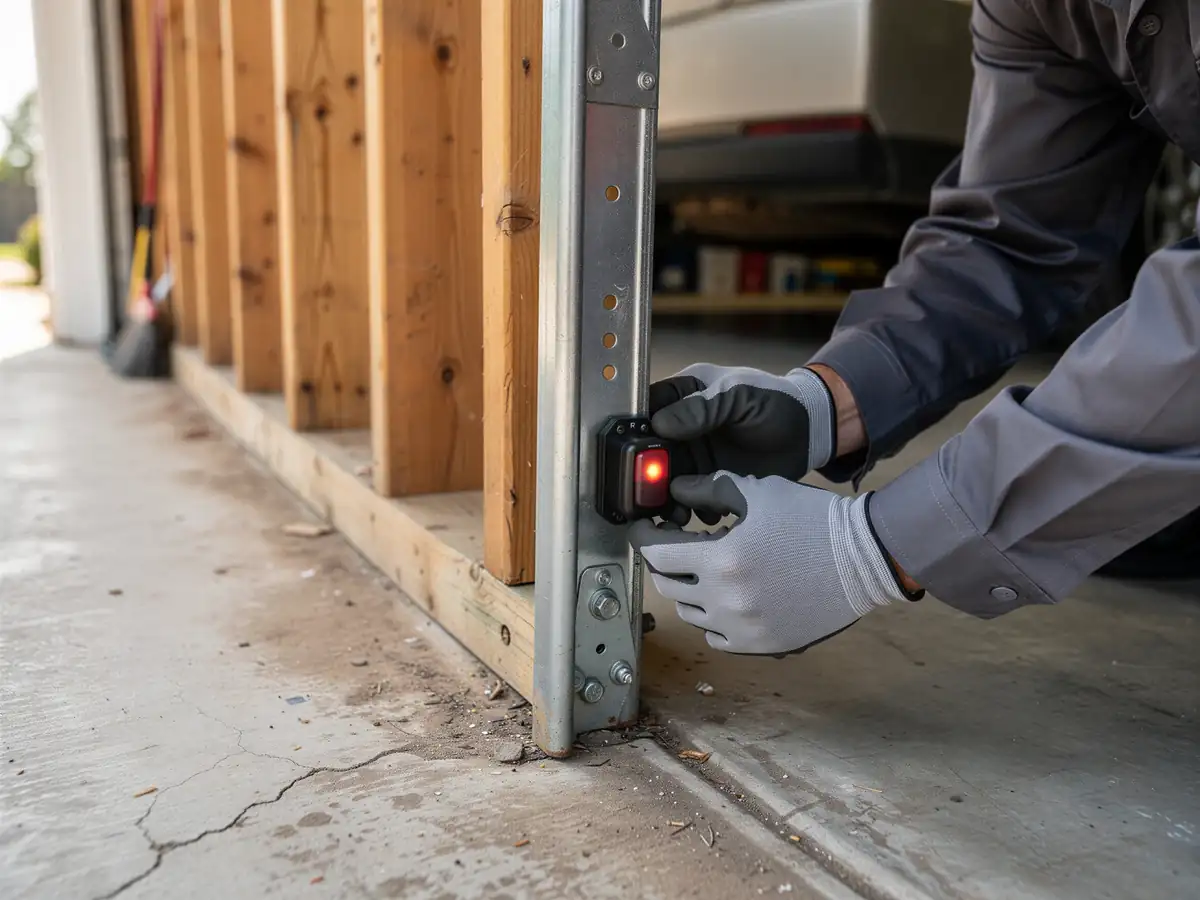
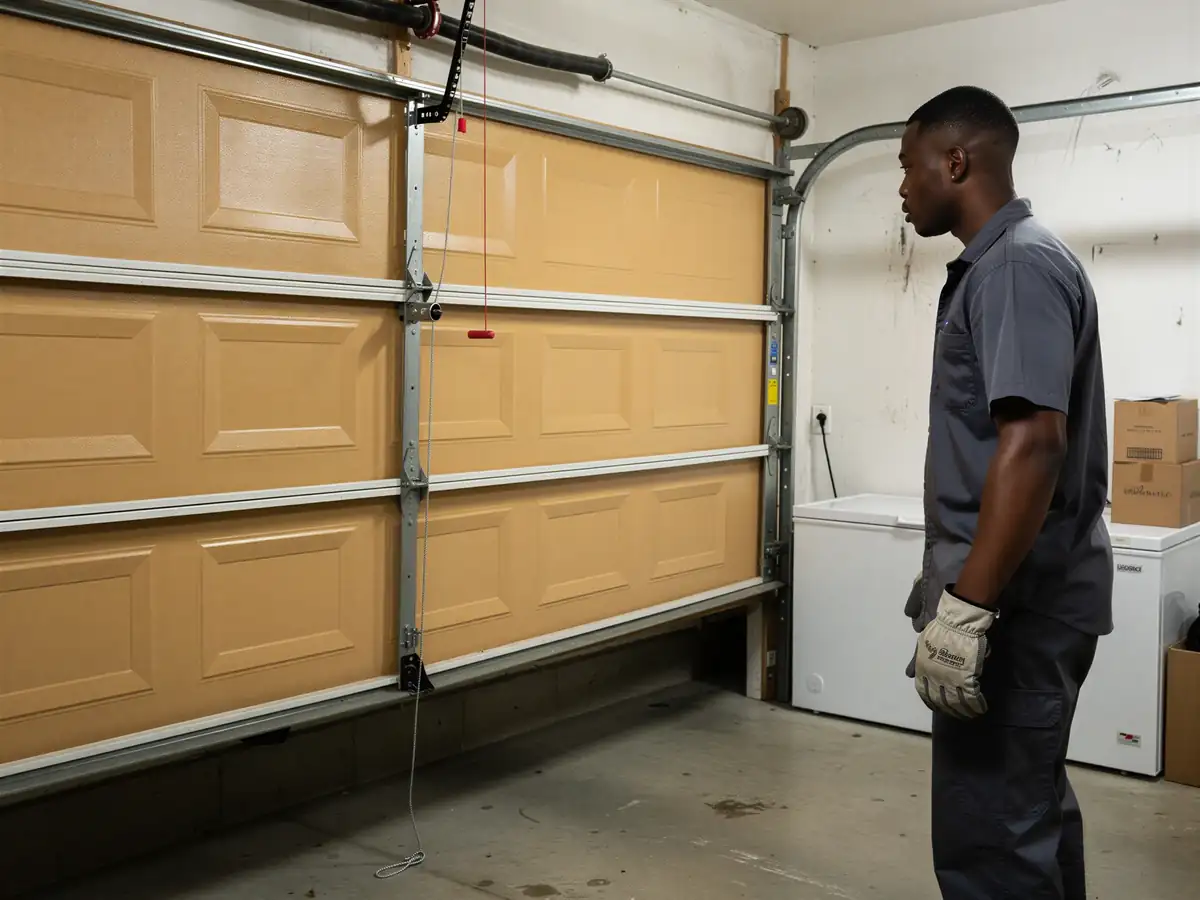
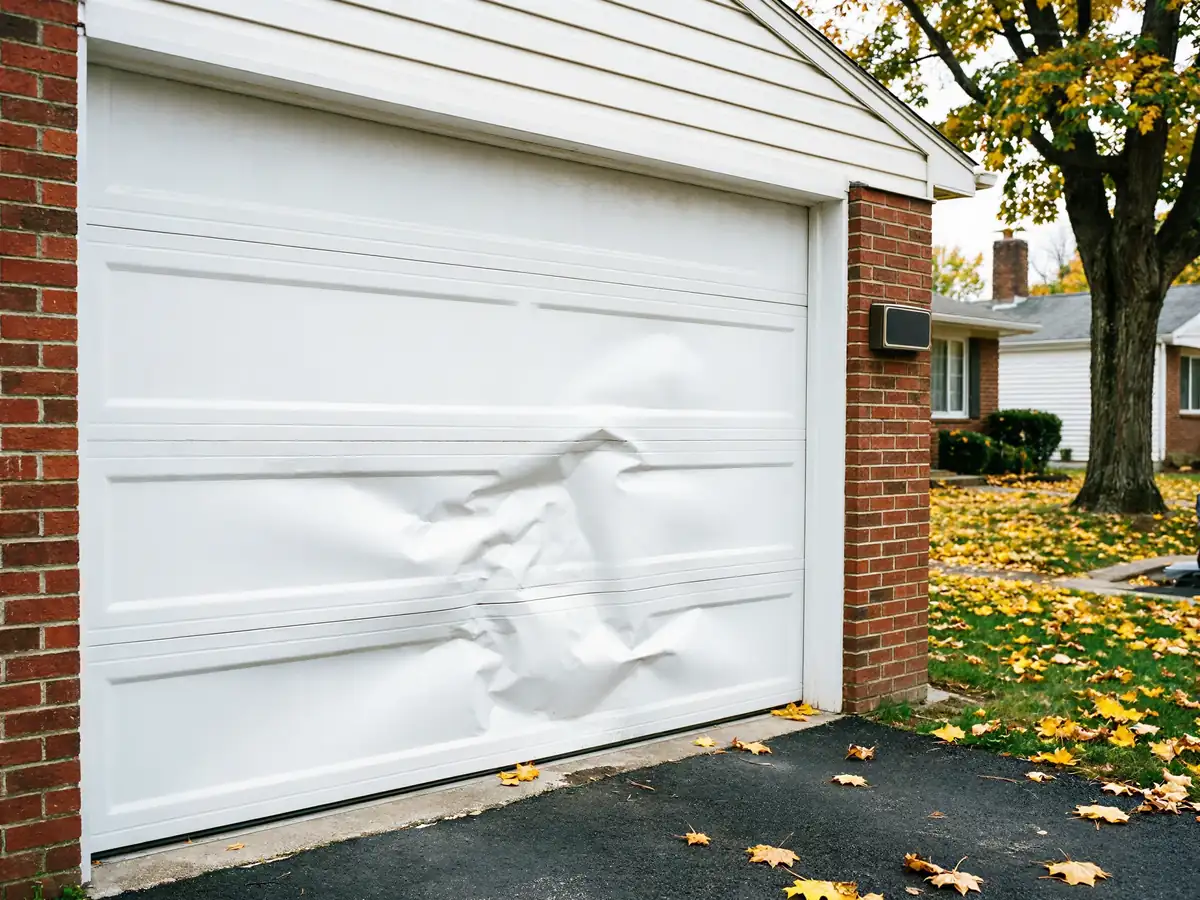
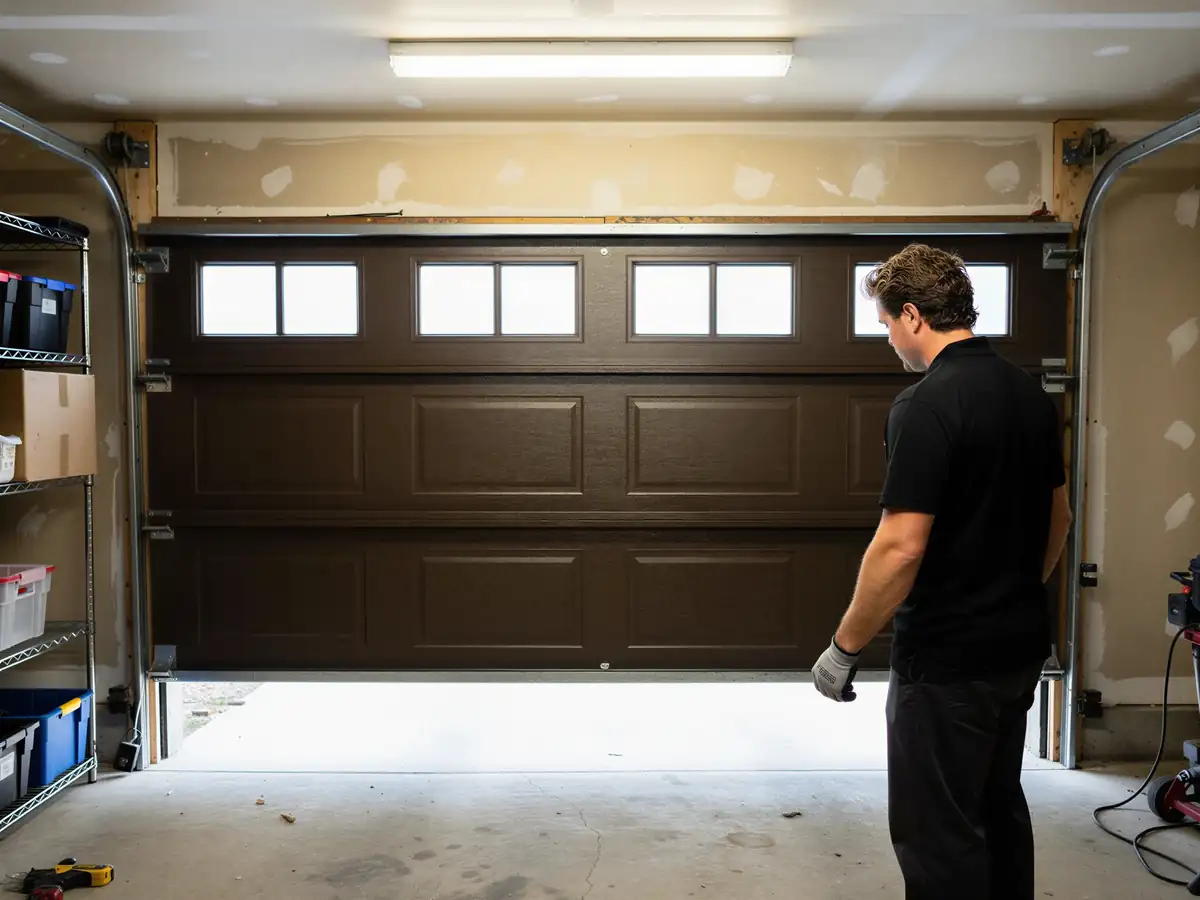
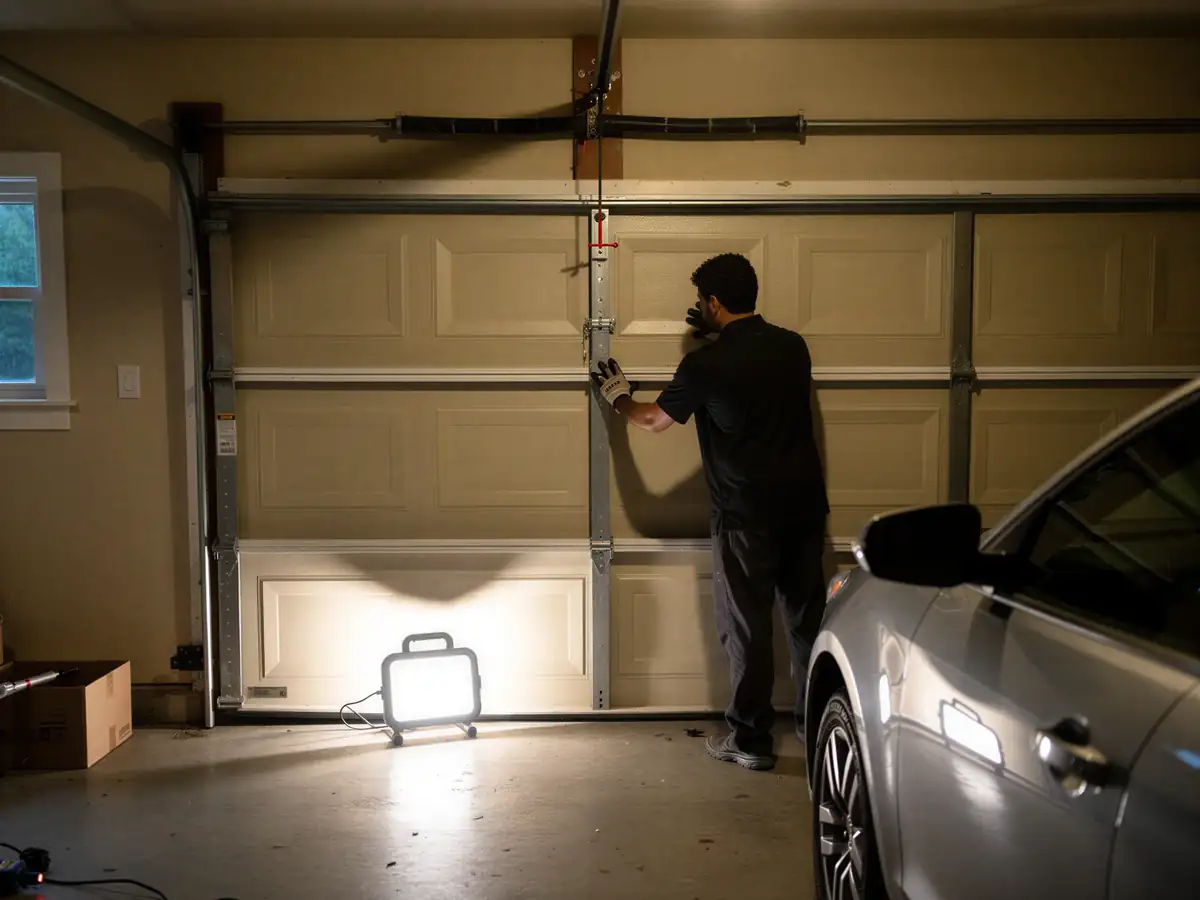
Before deciding whether to repair or replace, look at four things. First, the spring system - if it's a single torsion spring on a door built before the mid-1990s, parts for that exact mounting setup are getting harder to match, and a mismatched spring puts uneven load on the opener. Second, the track alignment - cold-climate concrete slab shift over 30-plus years tends to pull one side of the track out of true, which shows up as a door that binds or reverses partway up. Third, the panel seams - steel doors from the 80s and 90s used thinner gauge metal than what's sold today, and surface rust at the bottom panel seam is a sign the structure is weakening, not just cosmetic. Fourth, the bottom seal and weatherstrip - in a severe cold climate, a seal that's lost its flex lets in the exact kind of draft that runs up a heating bill all winter. None of these checks require tools beyond a flashlight and a level. If you find rust through the steel or a track that's visibly bent rather than just loose, that's past the point where tightening a bolt fixes it.
The Situation
Given that median build year of 1986 across the service area, a lot of the doors we see in neighborhoods like are at or past the point where original hardware is simply old, not damaged. That's not a reason to panic-replace a door that still runs fine. It is a reason to get the spring and track checked before a Columbus winter decides the timing for you, because a spring that lets go in January in a severe cold climate is a worse day than one that gets caught in October. If your house falls in that 1980s-90s band and the door has never had a spring replacement, that's usually the first thing worth asking about.