The Cost of This Job
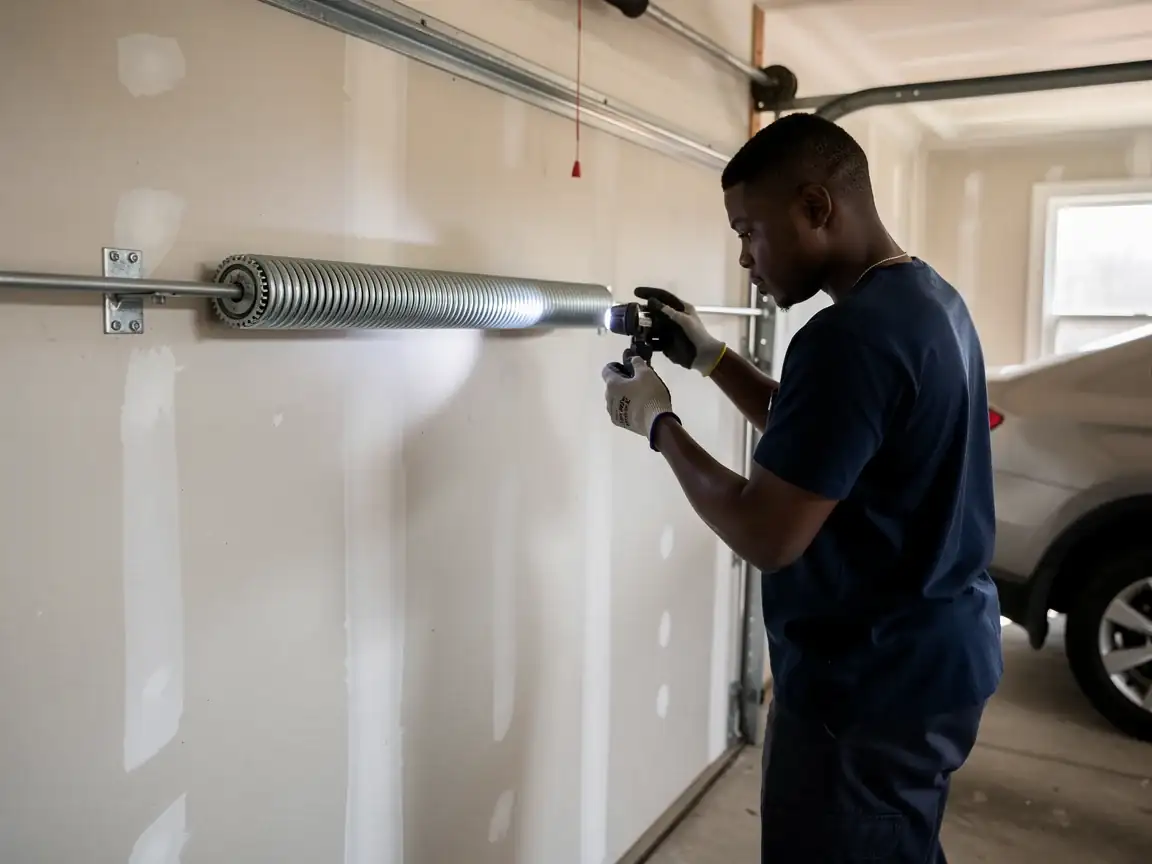
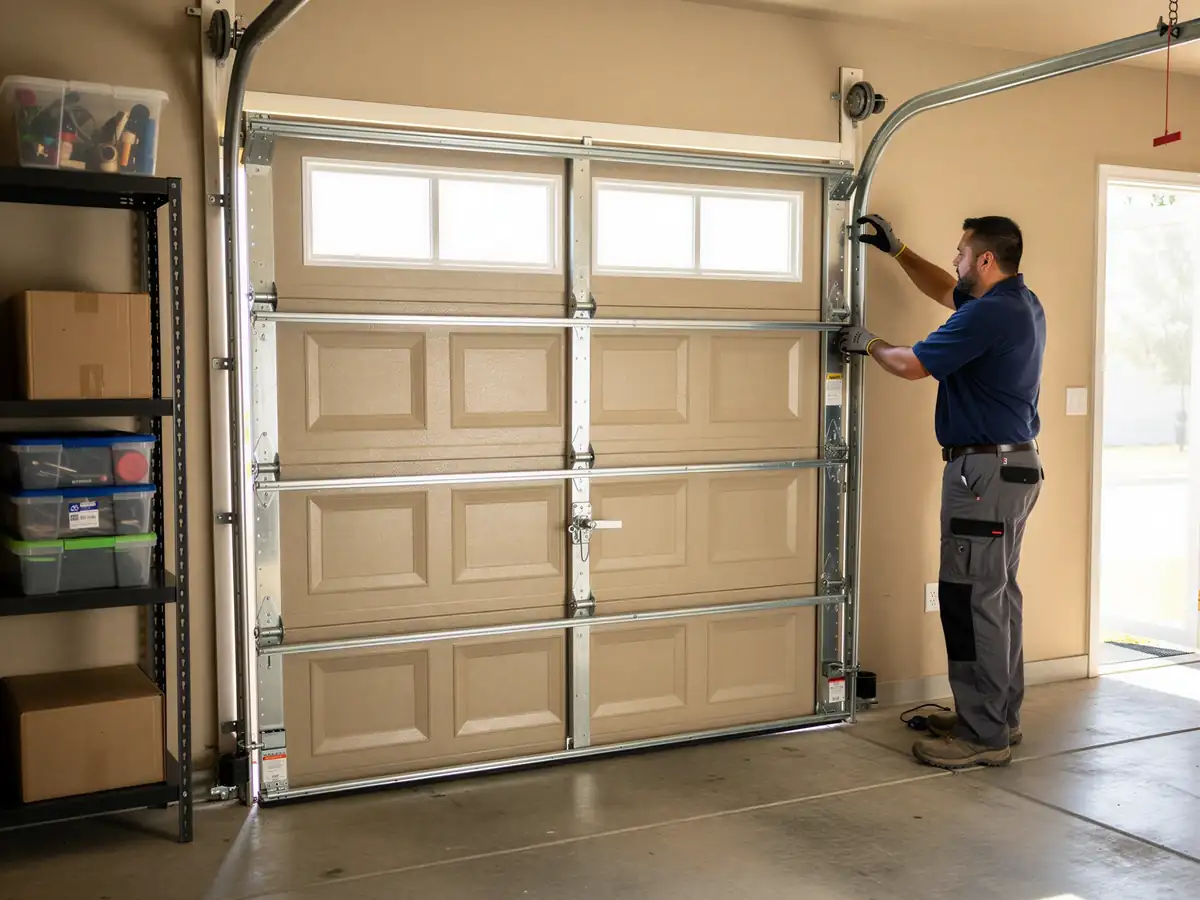
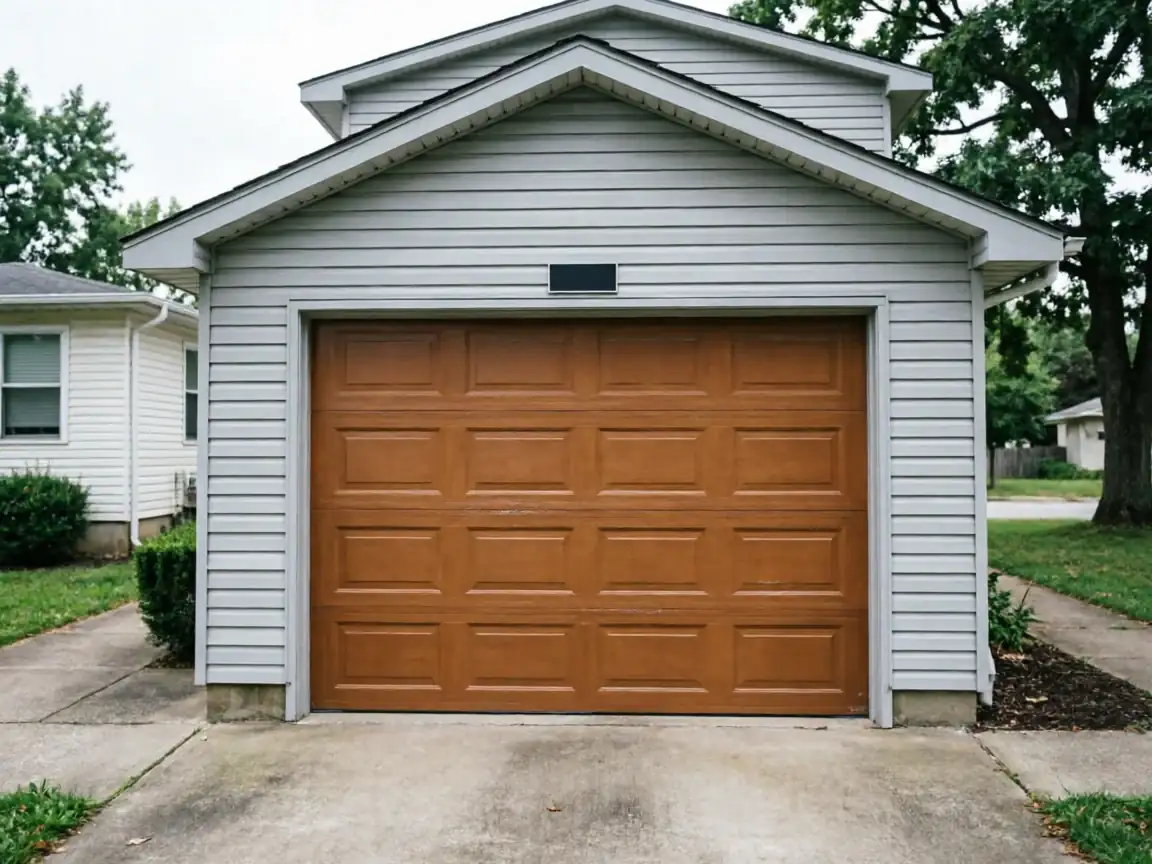
Most of Westerville went up around 1982, a few years ahead of the broader Columbus-area median of 1986. That matters for cost before you even talk about what broke. A door from that build wave is almost always a steel sectional on extension springs mounted along the horizontal track, not the torsion-spring setup that became standard in newer construction. Extension-spring jobs are usually simpler and cheaper to repair than torsion jobs, but if the cable drums or the pulley brackets are original, they're often rusted enough that replacing just the spring doesn't fix the shake and bind you're hearing. We don't quote a number here because the real driver is condition, not age alone - a door that's been serviced once or twice over forty-plus years costs less to fix than one that's been ignored the whole time. What we can tell you is that in this income bracket, with Westerville's median household income at $107,054 against the wider service area's $99,964, most owners choose to replace a tired opener outright rather than nurse a dying motor along, and that choice changes the bill more than the age of the door does.
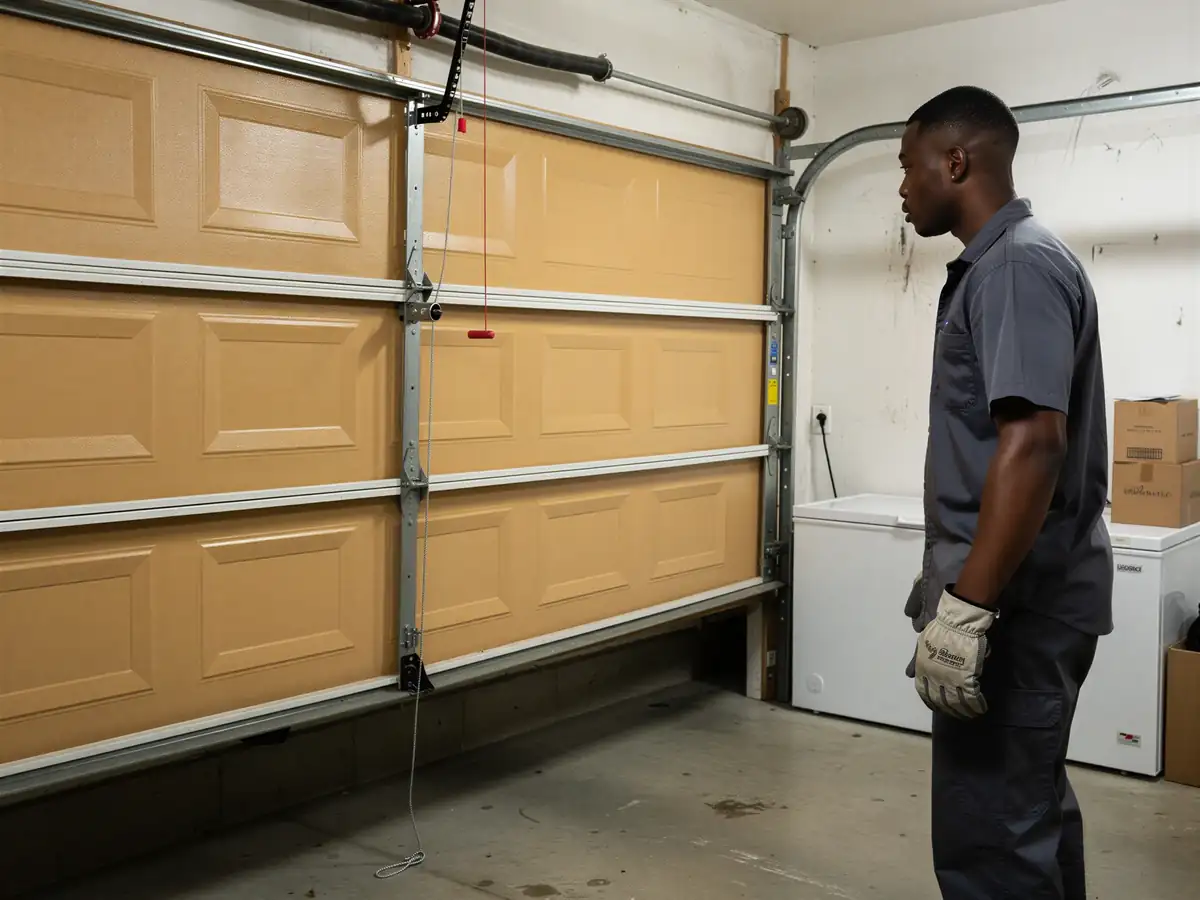
If a job needs a full teardown - track, springs, and panels all at once - that's a different conversation than a single broken cable, and we'll tell you which one you're looking at before we touch anything.
Where This Job Goes Sideways
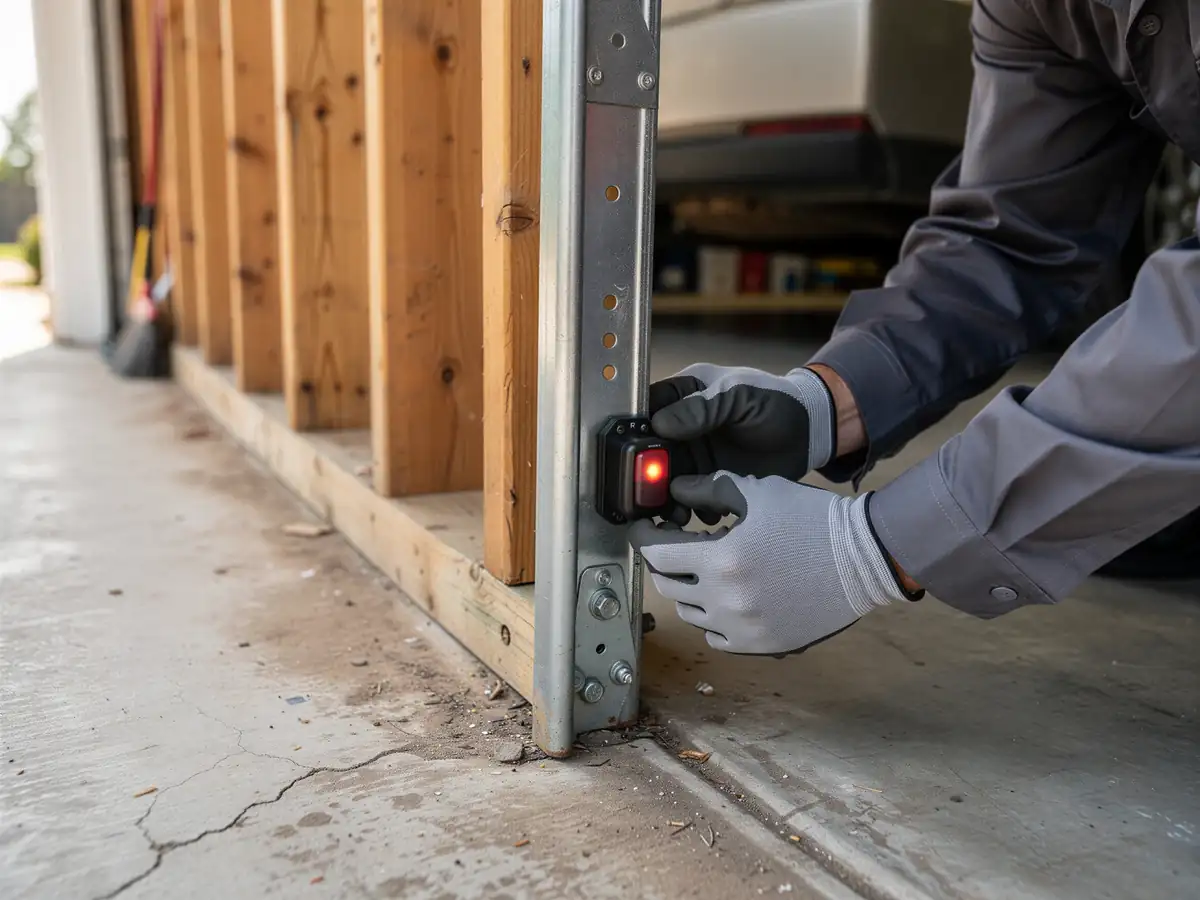
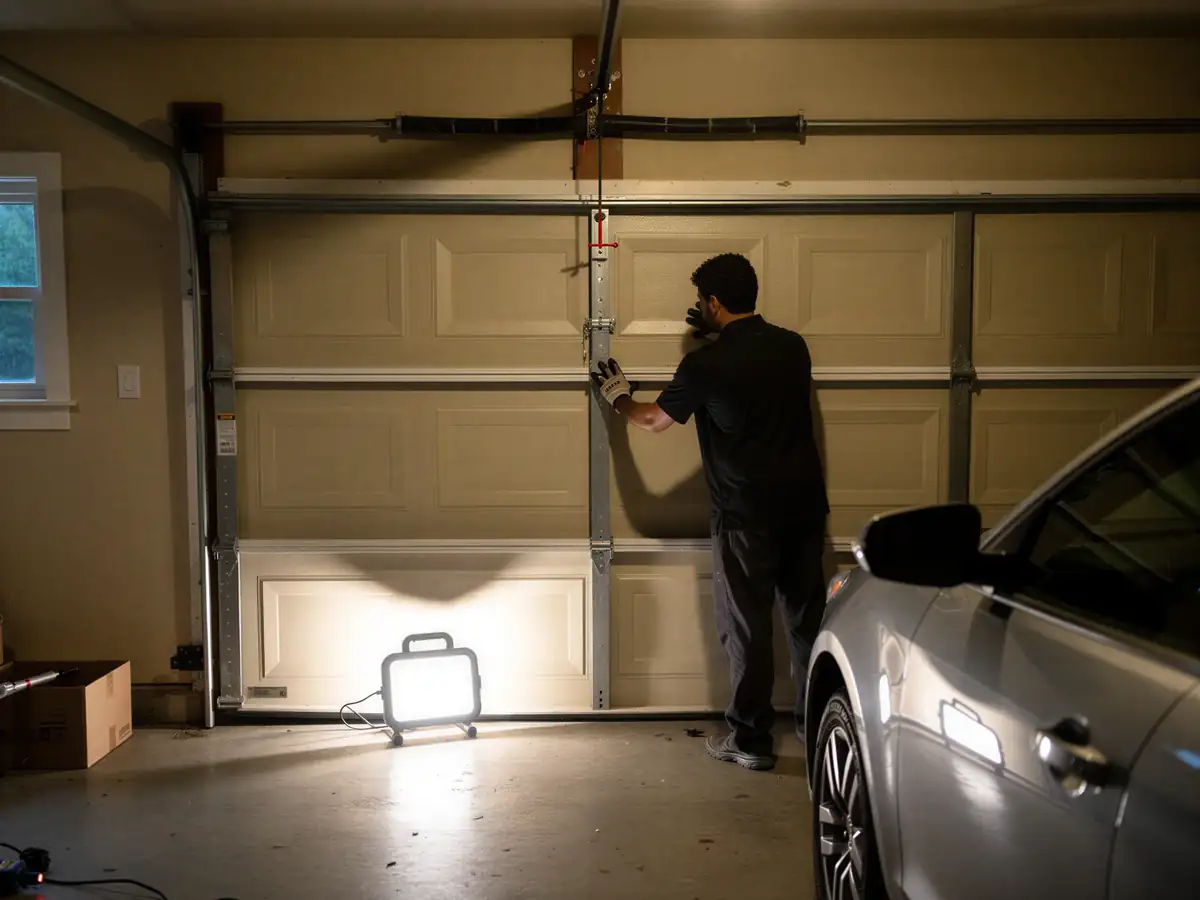
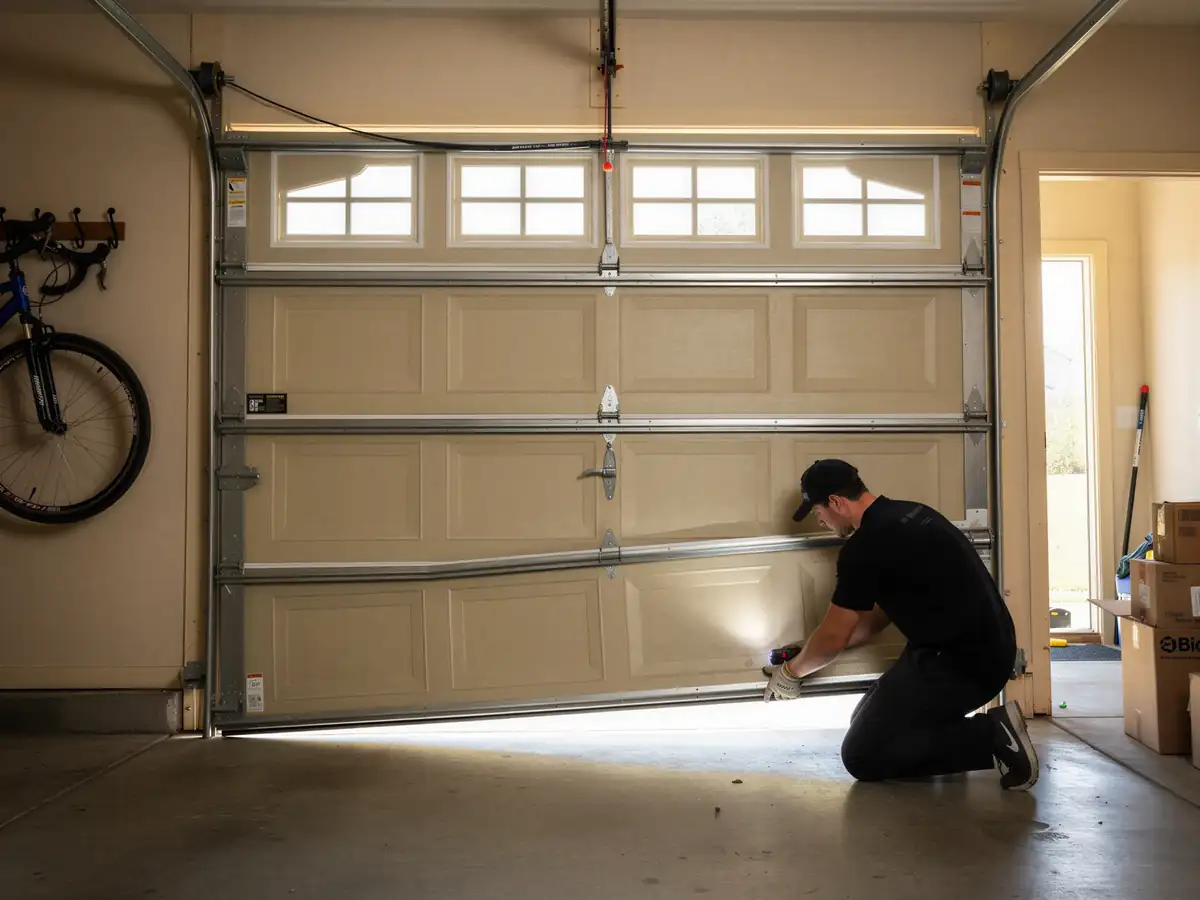
The calls that turn into bigger jobs than expected almost always start the same way: a homeowner hears a snap or a grind, assumes it's the spring, and it turns out the spring was the symptom, not the cause. On a door built around 1982, the extension spring cables run over pulleys bolted to the header, and those brackets loosen with forty years of door cycles. Replace the spring without checking the bracket and you're back out in a month. We also see openers from a later retrofit - bolted onto original hardware that was never sized for a heavier automatic unit - pulling the whole track out of square over time. That's not a Westerville-specific flaw so much as what happens when a 1980s door gets a 2000s opener without anyone adjusting the travel limits or balance.
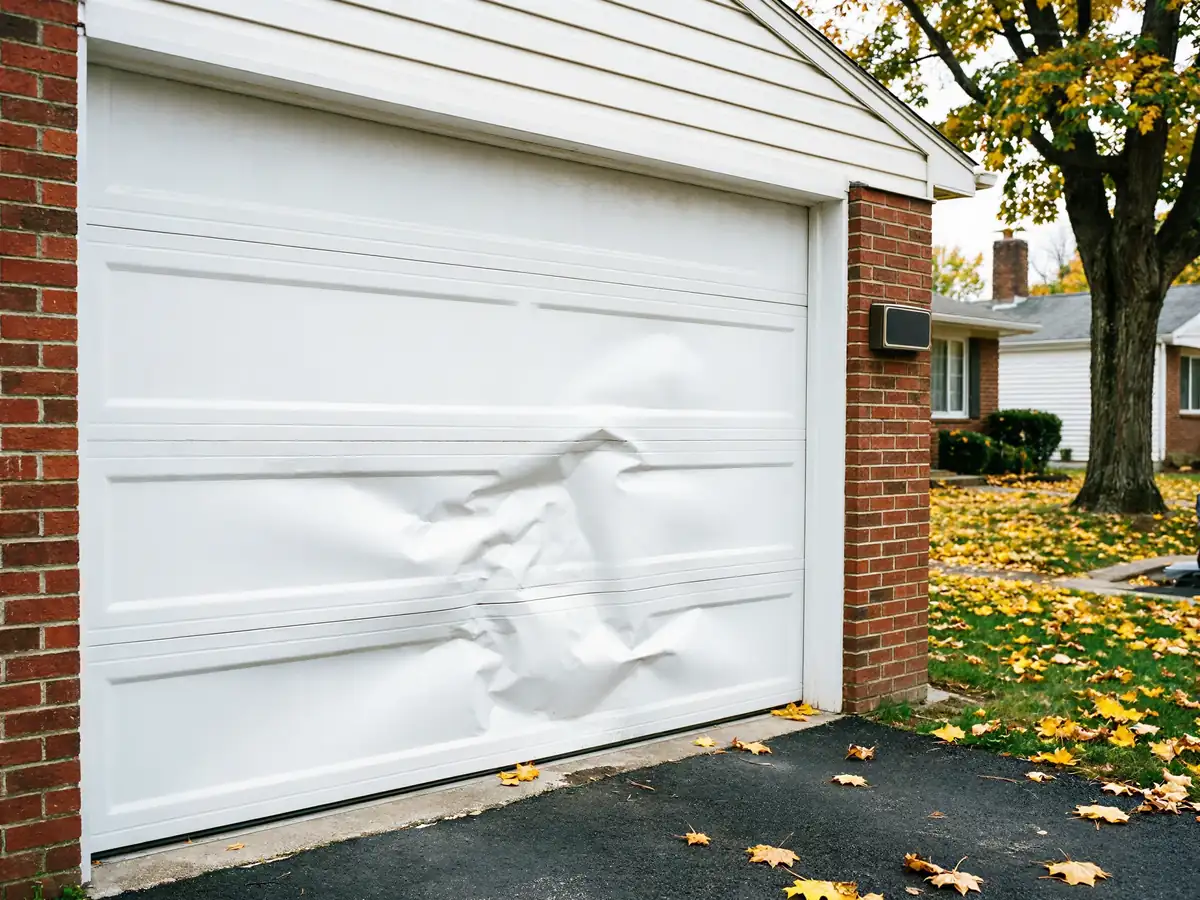
The honest limitation: if the track is bent in more than one spot, or the panels have rusted through at the bottom where snow melt sits against the slab, we're not going to recommend spending money chasing a repair. Past a certain point, buying parts for hardware this old costs more than a new door section, and we'll say so instead of billing you for a patch that won't hold through next winter.
Why It Happens Here
Westerville sits in the same severe cold-climate band as the rest of the Columbus service area
Which means winter is doing real work on steel doors every year, not just on the coldest night of it. Steel contracts in the cold, and a panel seam that's slightly out of true in July will bind in January. On a door built close to 1982, that steel is thinner-gauge than what's sold today, and the weatherstripping at the bottom has usually been replaced at least once already - if it hasn't, that's often the first thing we check, since a hardened or torn seal lets cold air pool against the bottom panel and accelerates the exact cracking we're talking about.
The other piece is simply how much of Westerville's housing dates to that same narrow window
Unlike parts of the wider area where stock spans 1938 to 2006, Westerville's build-out clustered tightly enough that a large share of the doors we see on these calls share the same era of spring, track, and panel gauge. That's useful for us - it means we're not guessing at what's behind the wall before we get there - but it also means a lot of these doors are approaching the same failure point at close to the same time.
Stocked Parts
Because so much of Westerville's door stock lines up with that early-1980s build window, we carry extension springs, cable, and pulley hardware sized for that era rather than only stocking parts for newer torsion systems. Rollers and hinges for steel sectional doors from that period are also routine stock, since they wear at a predictable rate and we'd rather have them on the truck than make a second trip.
What we don't keep on hand is anything custom - a non-standard panel width, a discontinued opener logic board, or decorative hardware that was never mass-produced. Those parts can take time to source, and we'll tell you up front if a job is headed in that direction rather than let you assume it's a same-visit fix. The truck comes from Columbus to reach Westerville, about 10 miles out, so the parts that matter are the ones already loaded before the call, not the ones we'd have to order after seeing the door.
For the full run of service areas this covers, see the Westerville service area page, and for anything outside a single repair call, the Columbus garage door page covers the rest of what the company does.