Can You Do This Yourself
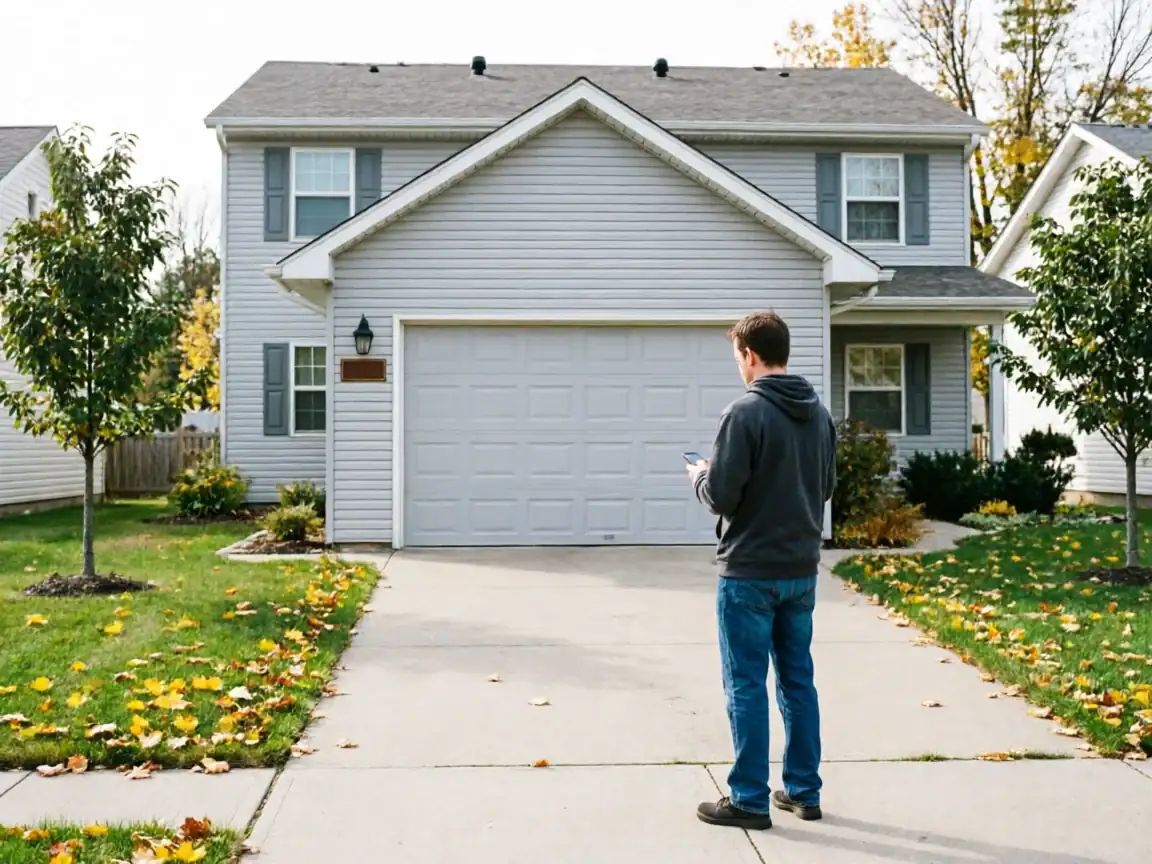
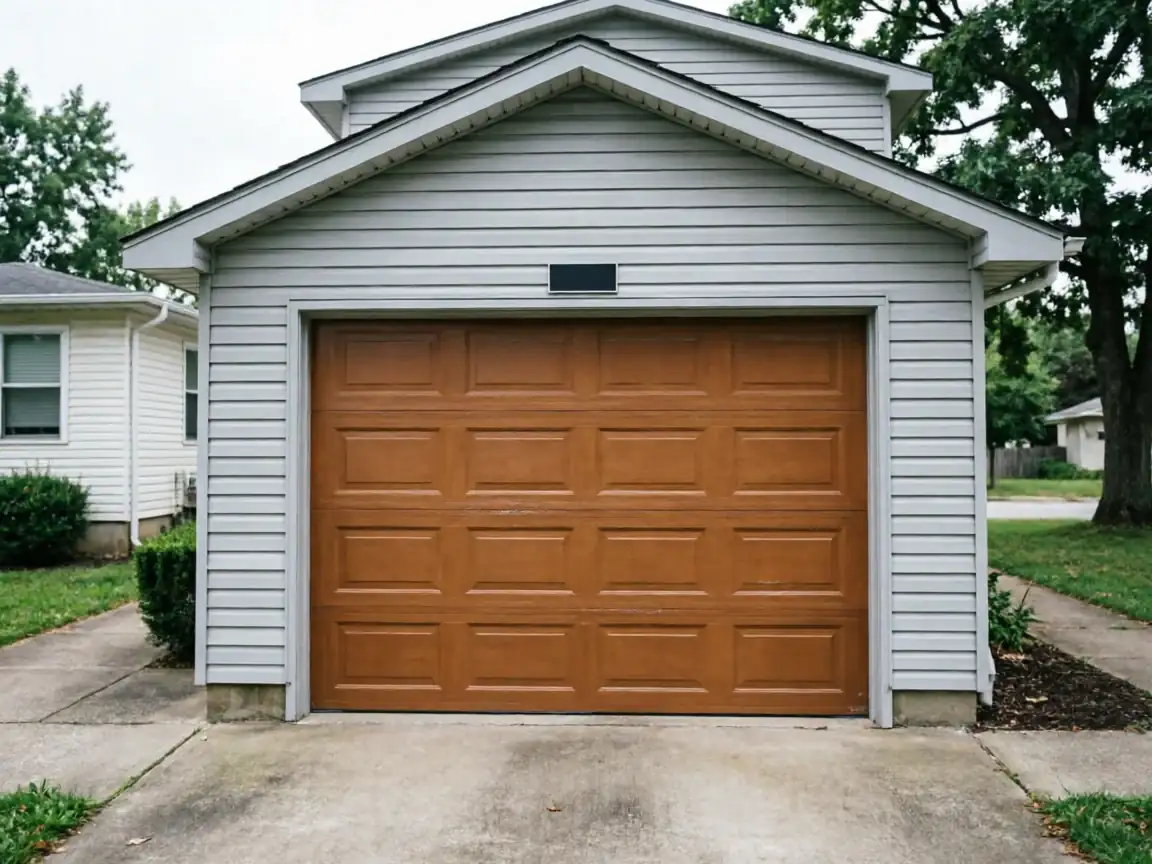
A lot of Dublin houses went up around 1996, a decade newer than the typical build year across the rest of the service area. That matters more than it sounds like it should. Newer construction here often still has its original opener and torsion spring set, because the house itself hasn't hit the age where a first replacement becomes routine. If your opener has never been swapped, you're likely running factory hardware pushing close to thirty years old.
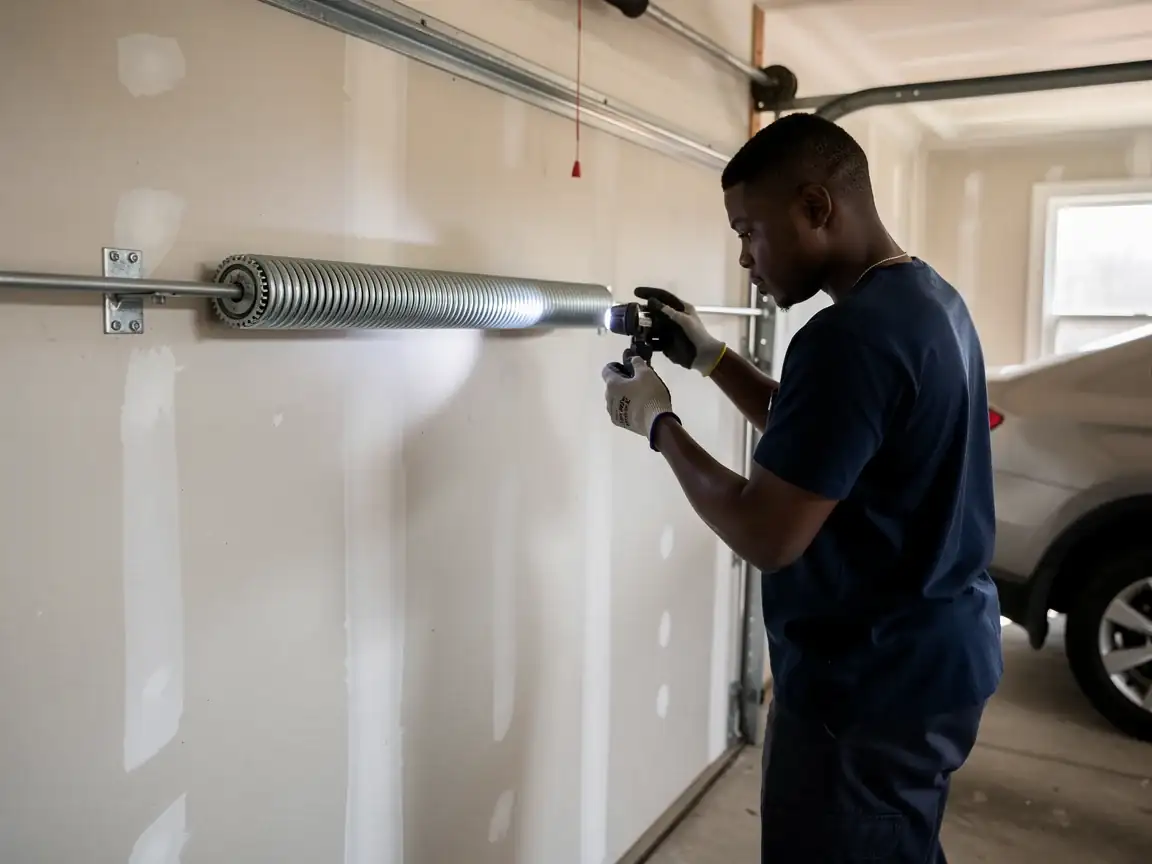
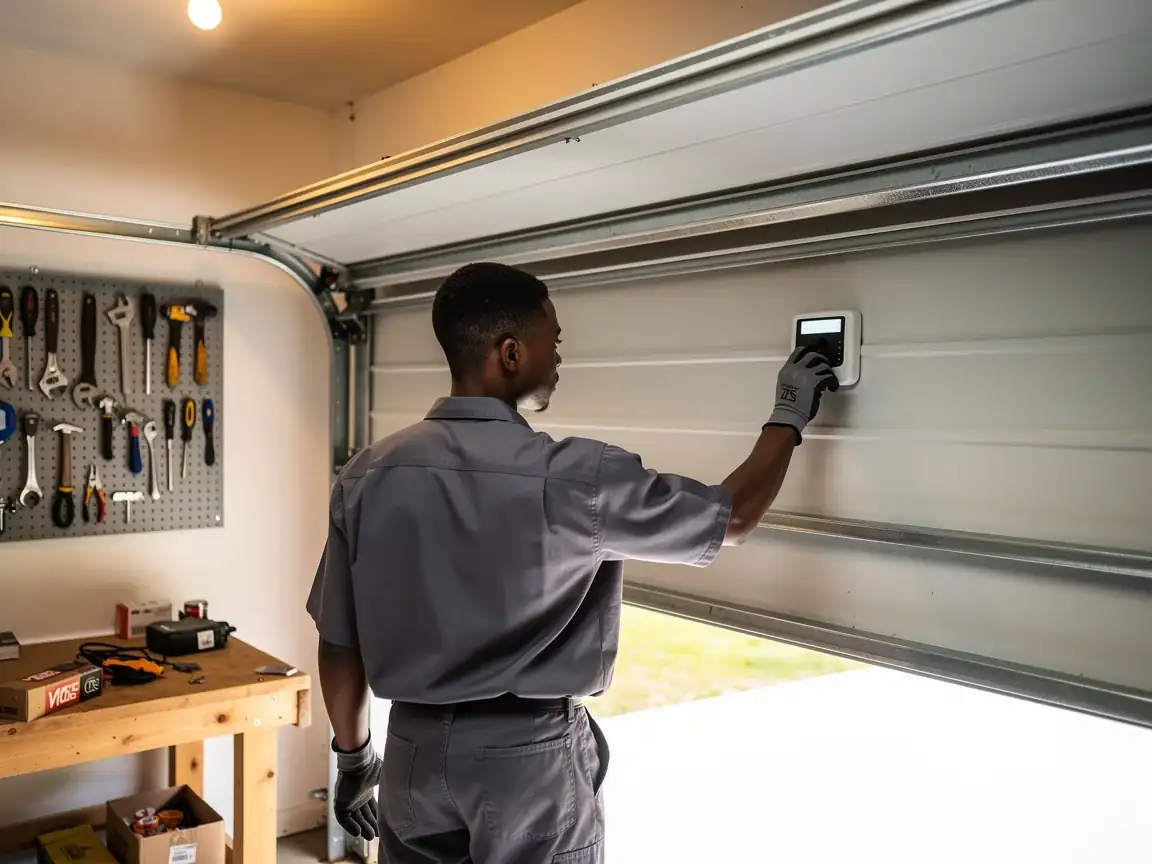
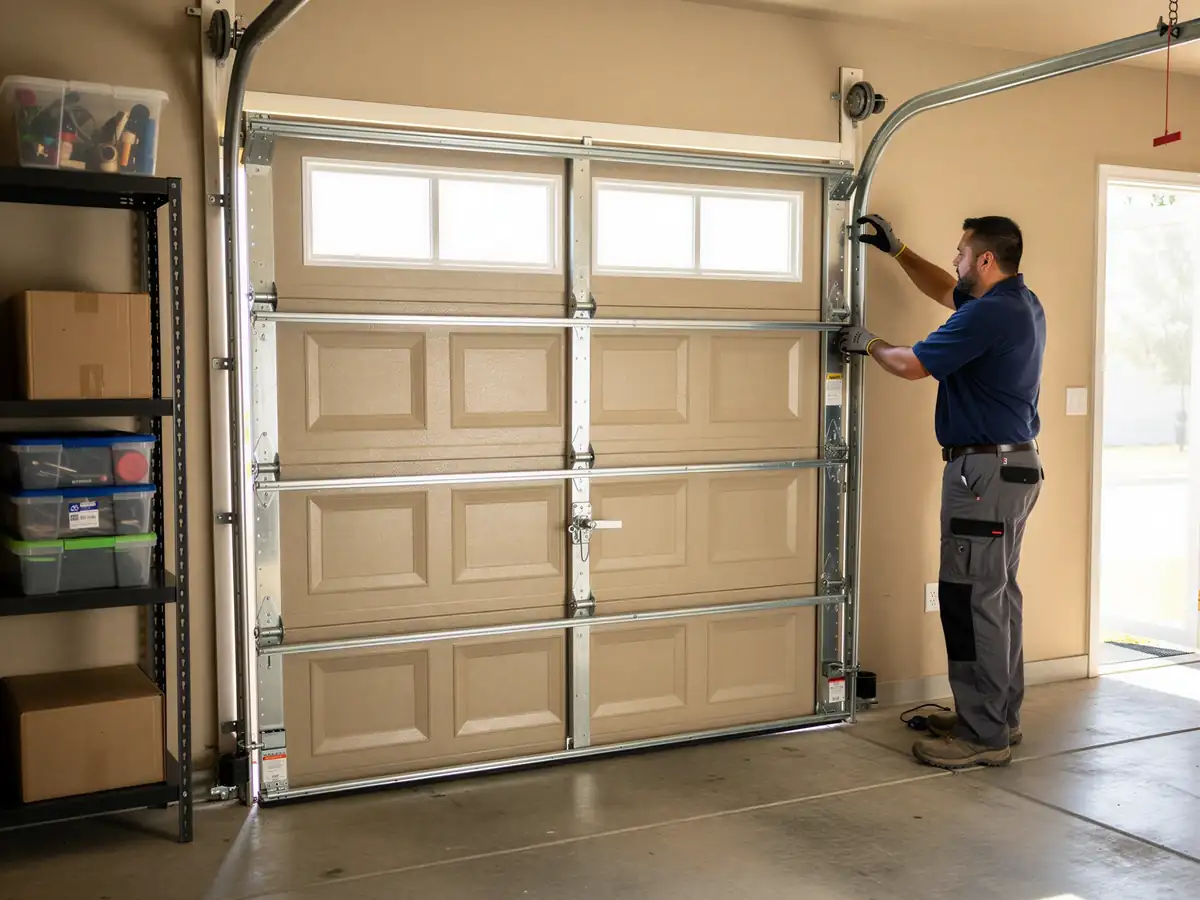
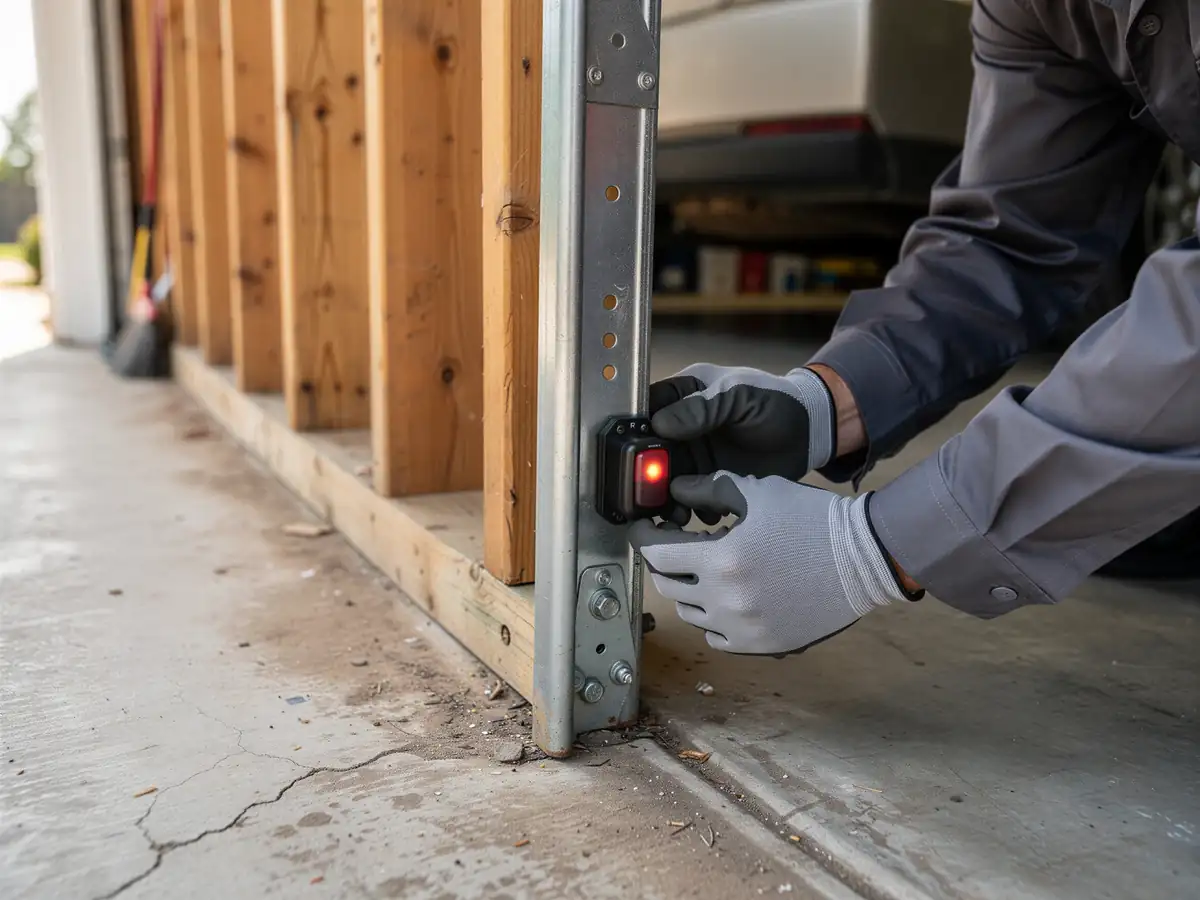
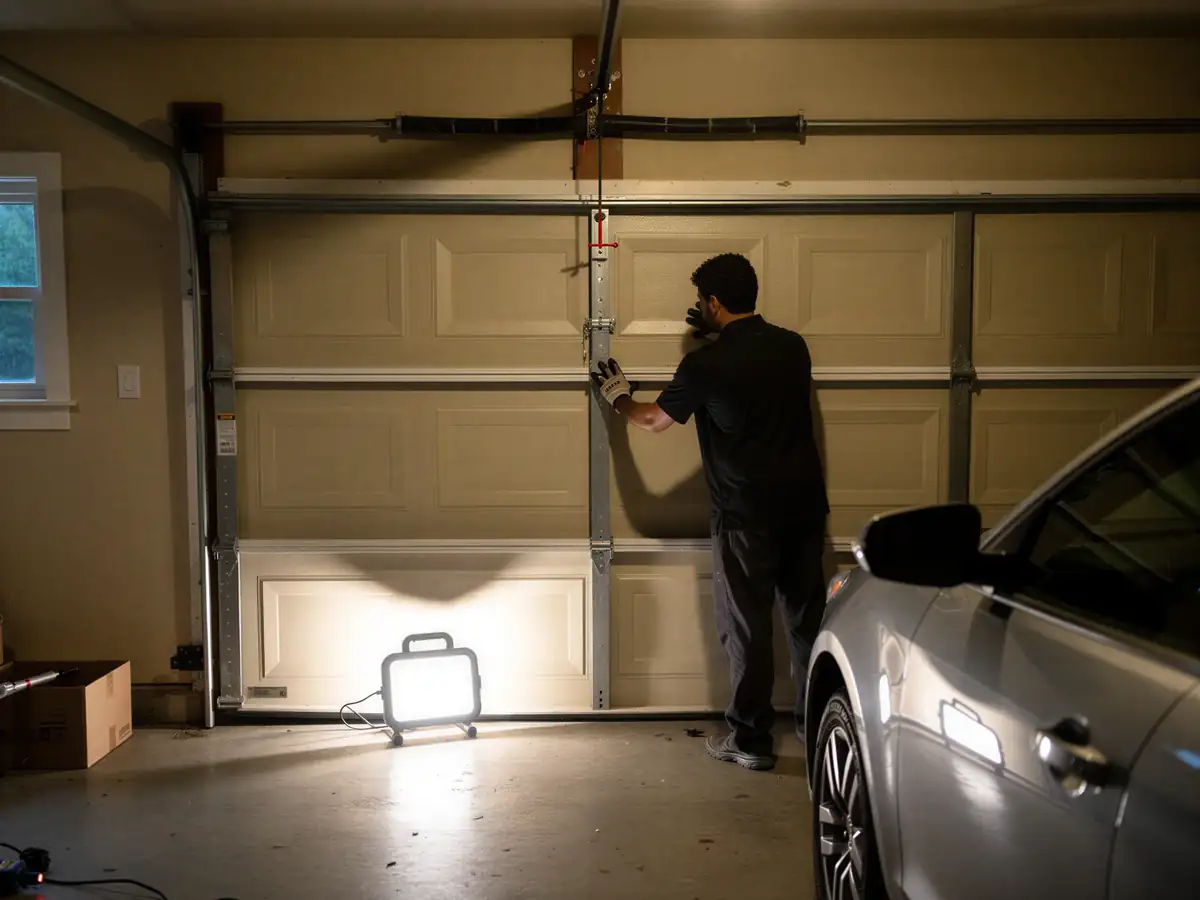
There's a real split in what you can safely handle. Swapping a remote battery, clearing the photo-eye sensors of dust, lubricating hinges and rollers, tightening loose bolts on the track brackets - all fine, all things an owner can do with basic tools and twenty minutes. A torsion spring under tension is not that job. Neither is realigning bent track or replacing a cable that's frayed at the drum. Those carry enough stored force to break a hand or worse, and they're not forgiving of a first attempt.
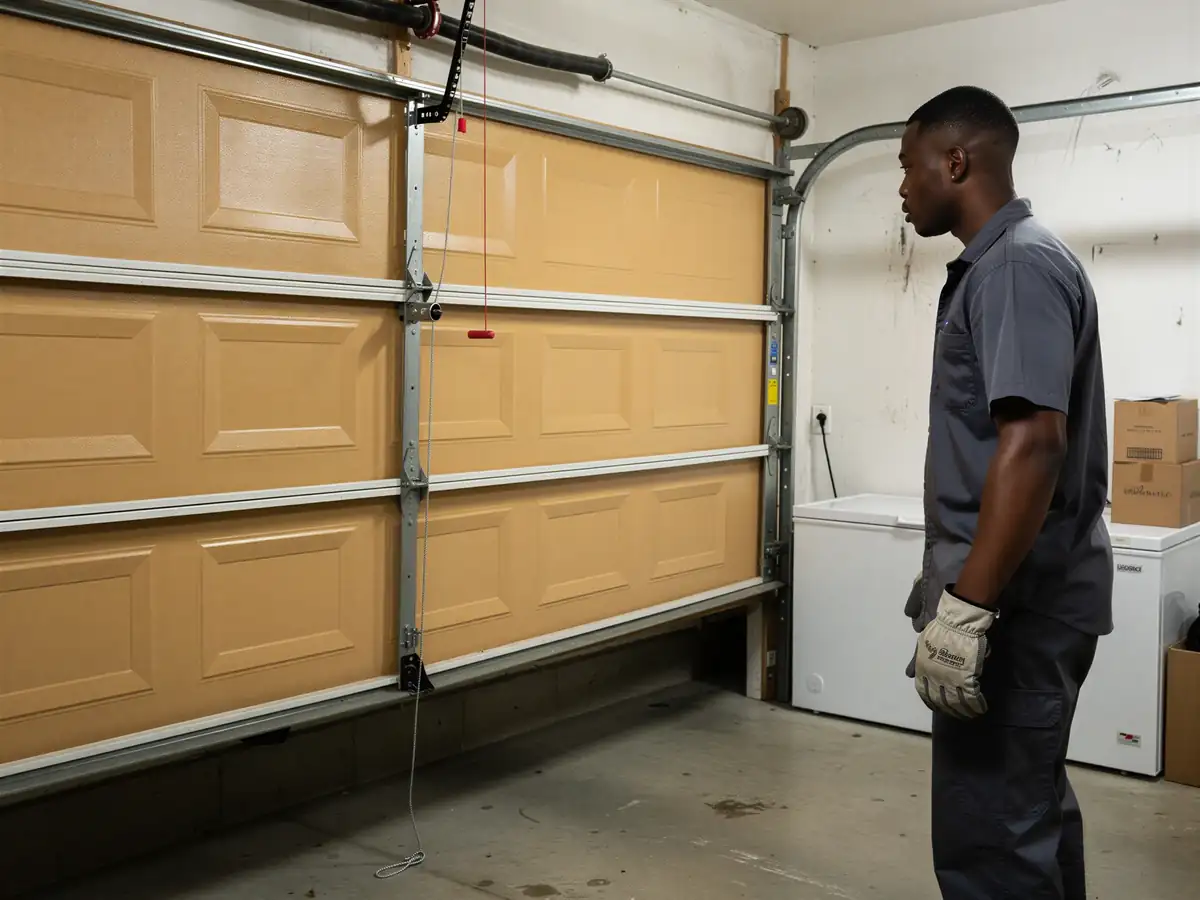
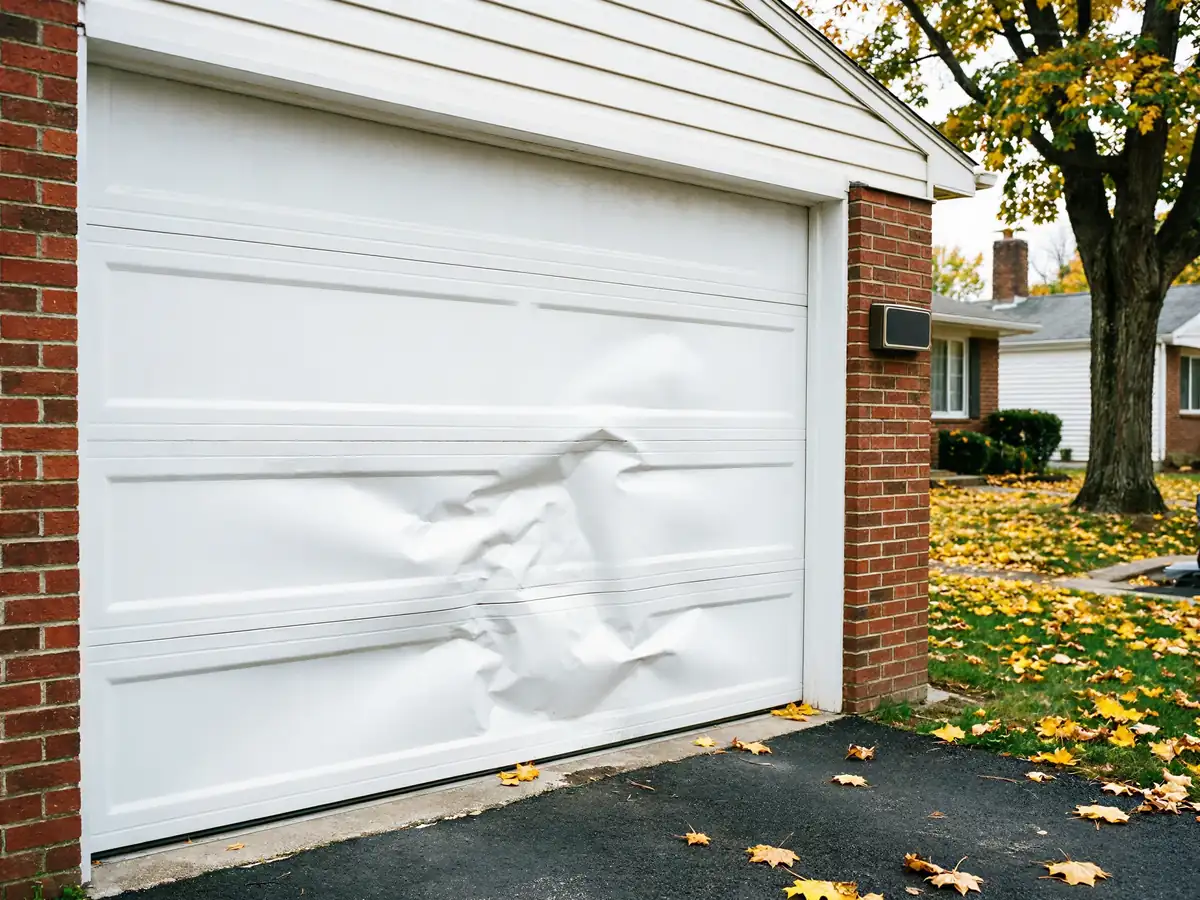
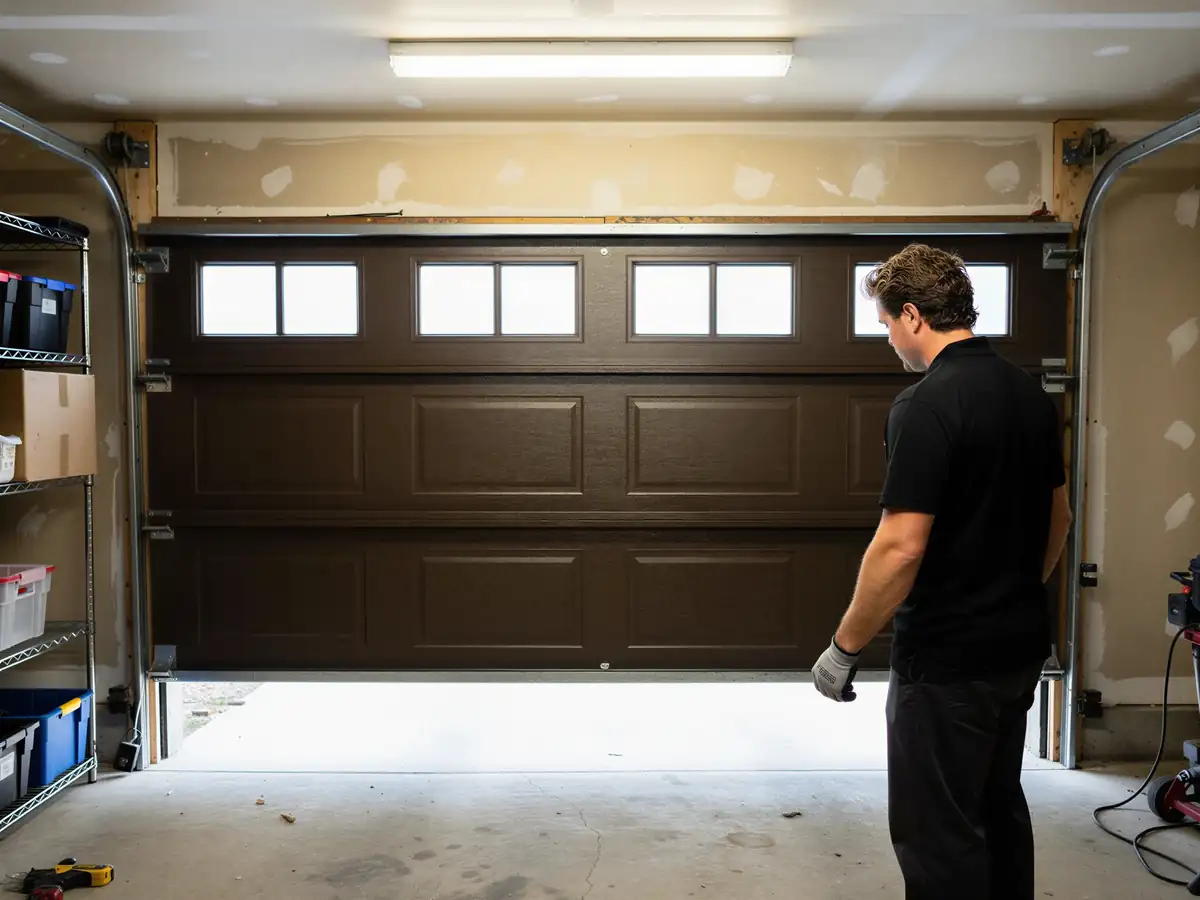
If the door won't move, reverses on its own, or makes a bang and then goes slack, stop opening it by hand and call it in. That's almost always spring or cable, and guessing wrong on either one is how a simple fix becomes an ER visit.
Where This Job Goes Sideways
Mid-90s builds in this area tend to have one failure mode that surprises people: the opener's logic board outlives the gears, so the unit hums, the light comes on, but the door barely creeps. Owners assume the opener is dead and replace the whole unit when the fix was a $40 gear kit. We check that before we quote a replacement.
The other place it goes sideways is DIY spring work that gets half-finished. Someone loosens the set screws, loses nerve or runs out of daylight, and now the door is worse than when they started - unwound but still live, which is its own hazard. We see it, and the honest answer is sometimes we can finish the job in the original trip, sometimes the spring itself is too far gone and needs full replacement rather than adjustment.
Columbus-area winters push cold-weather stress on steel springs and nylon rollers across this whole region, and Dublin's newer stock isn't exempt just because the houses are younger. A spring rated for a certain cycle count doesn't care what year the house was built - it cares how many times it's been wound and unwound through freeze-thaw swings.
How It Shows Up
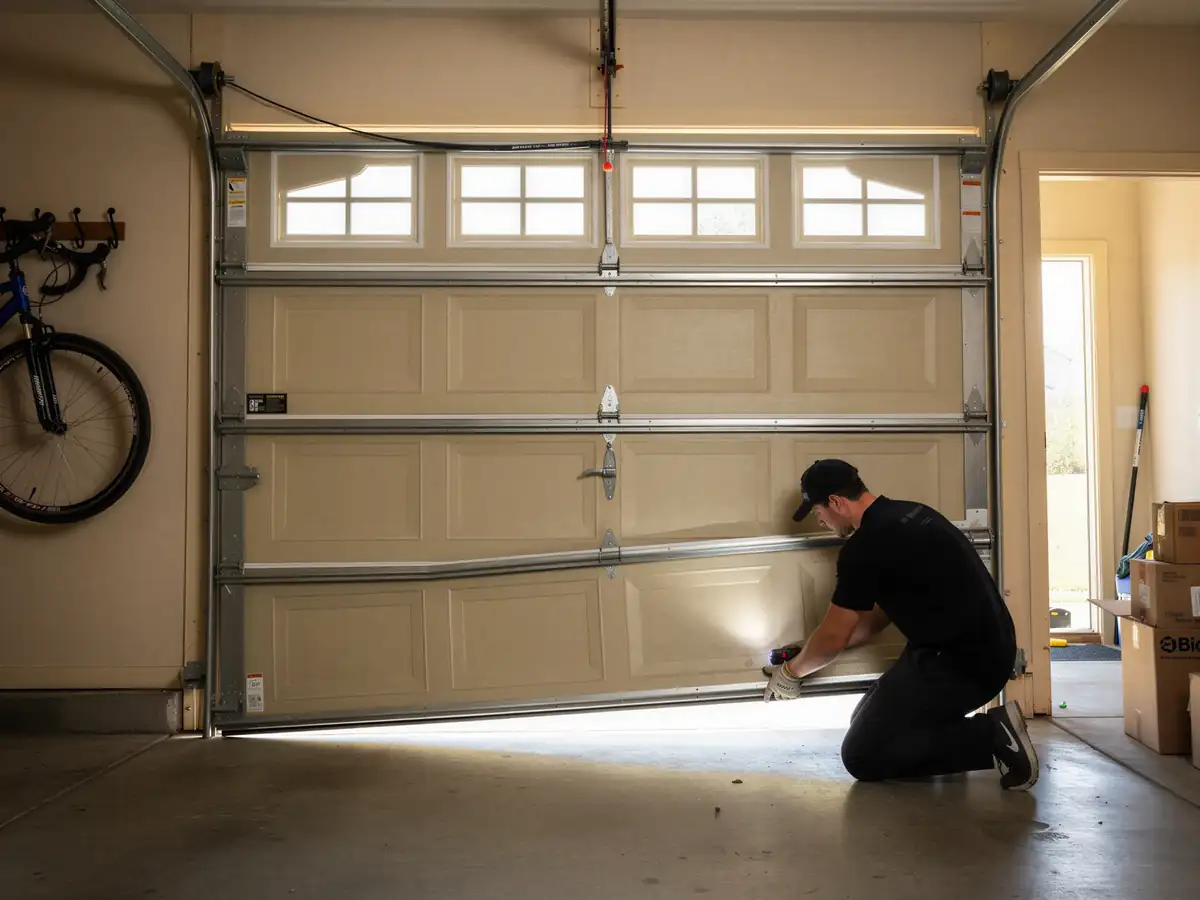
The most common call out of this area is a door that opens partway and stops
Or one that reverses before it touches the floor. Both point at the same thing: a spring that's lost tension or a sensor that's gotten knocked out of alignment, and on 1990s-era openers, it's usually the spring.
A second pattern specific to homes from this build window is a loud bang from the garage followed by the door refusing to budge
That's a torsion spring letting go completely, and it's loud enough that owners describe it as a gunshot or a car backfiring. It is not an emergency in the sense of danger if the door stays shut, but it does mean the door is stuck until the spring gets replaced.
Less dramatic but just as common
A door that's noticeably heavier to lift by hand than it used to be. That's a spring losing tension gradually rather than snapping, and it's worth a call before it fails outright, since a slow failure is cheaper to catch early than a sudden one.
Stocked Parts
We carry torsion springs, extension springs, cables, rollers and standard opener gear kits on the truck, which covers most calls out to this part of the service area in one trip. Openers themselves - if the whole unit needs replacing rather than a part inside it - usually mean a specific model match, and that's not something we keep ten of in stock for every brand that might be installed in a given house.
The honest limitation: if your opener is an older or less common brand, the logic board or a specific drive gear can take a few days to source. We'll tell you straight whether it's a same-trip fix or a parts-order situation before we start, not after.